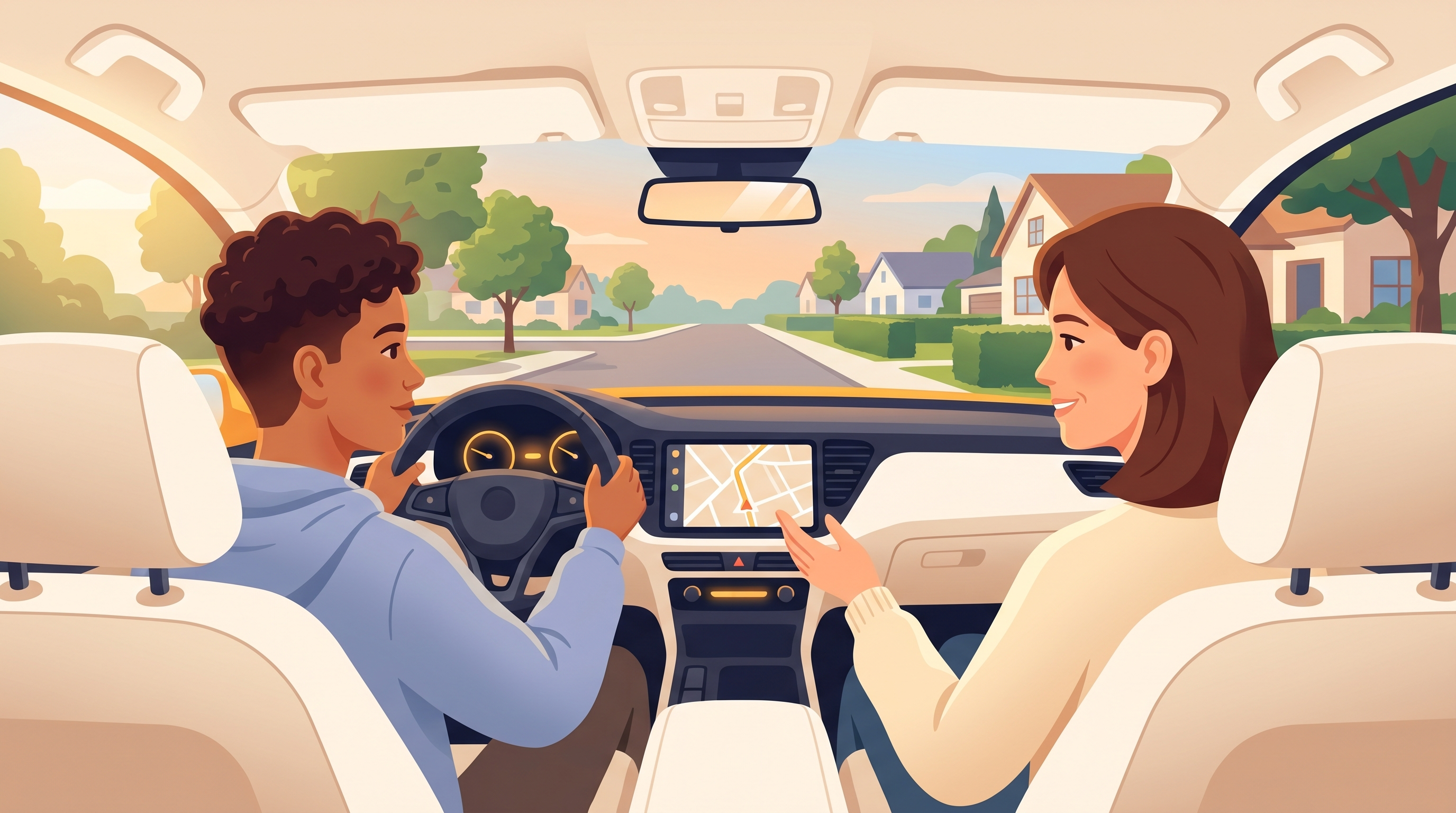
Master every step of teaching your teen to drive. State-by-state requirements, practice schedules, readiness signs, emotional coaching, and the financial reality—everything parents need to know.
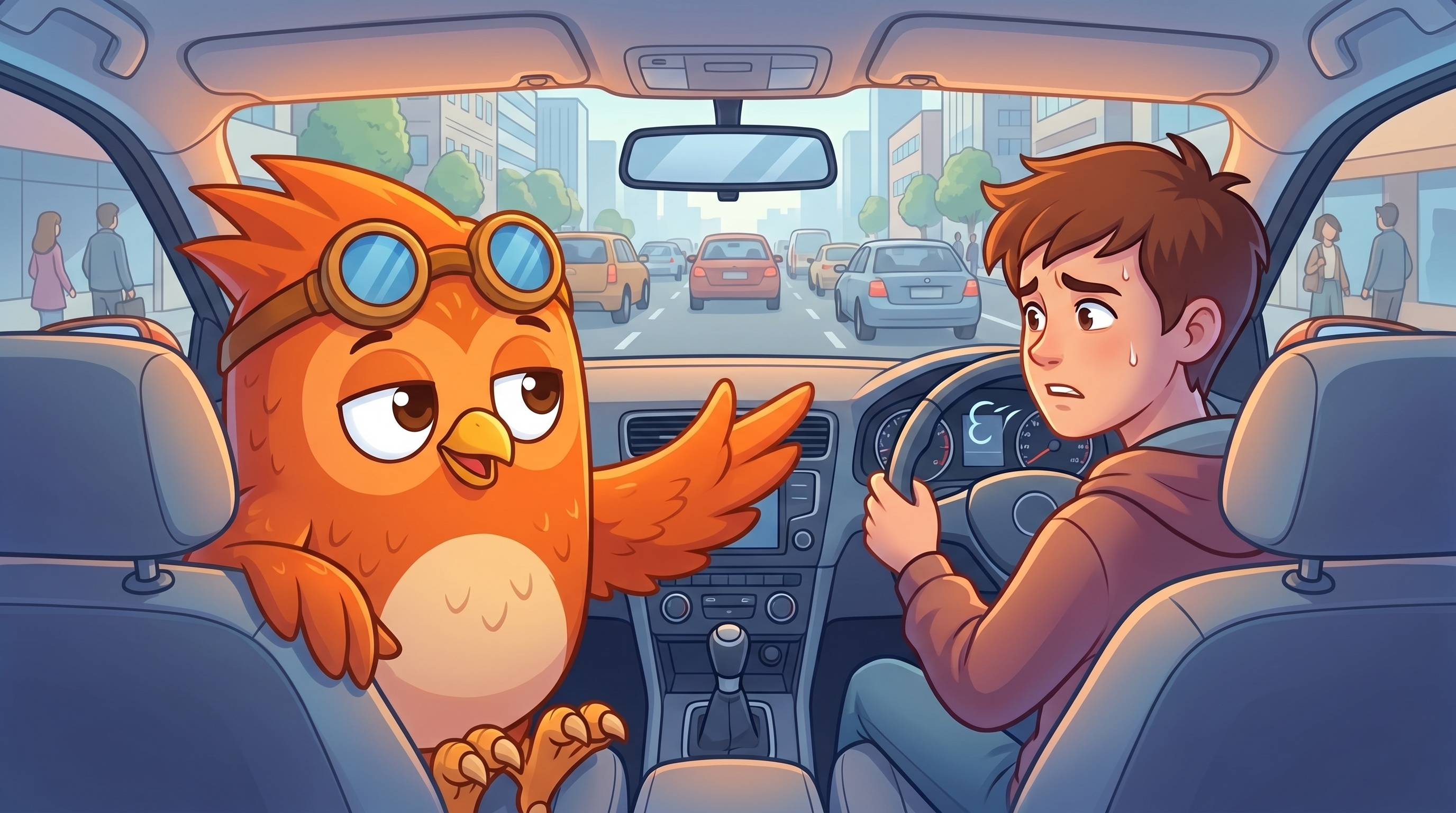 You might assume professional driving instructors carry the weight of teen driver education. They don't. Data shows that parents supervise 80%+ of all practice driving hours, regardless of whether teens are enrolled in formal driver's education courses. That's not incidental—it's foundational.
Here's why this matters: your teen trusts you in a way they don't trust a stranger instructor. You know their temperament, their anxiety triggers, their strengths. You've spent years calibrating how to motivate them. That relationship is your superpower as a driving instructor.
But it also carries a hidden cost: your own anxiety transfers to your teen through the car. When you grip the dashboard, gasp at yellow lights, or hit the phantom brake pedal, your teen's nervous system mirrors yours. They absorb your fear as a signal that driving is dangerous in ways they hadn't considered. This guide addresses both sides—not just how to teach your teen, but how to manage your own emotions while doing it.
This roadmap covers everything: state-by-state requirements, a 12-week progressive practice plan, signs your teen is genuinely ready for the DMV road test, emotional strategies for both of you, and the financial realities of adding a teen driver to your household. You'll also learn how to supplement parent teaching with structured tools—like practice tests—that provide objective feedback your teen (and you) need to know when they're truly ready.
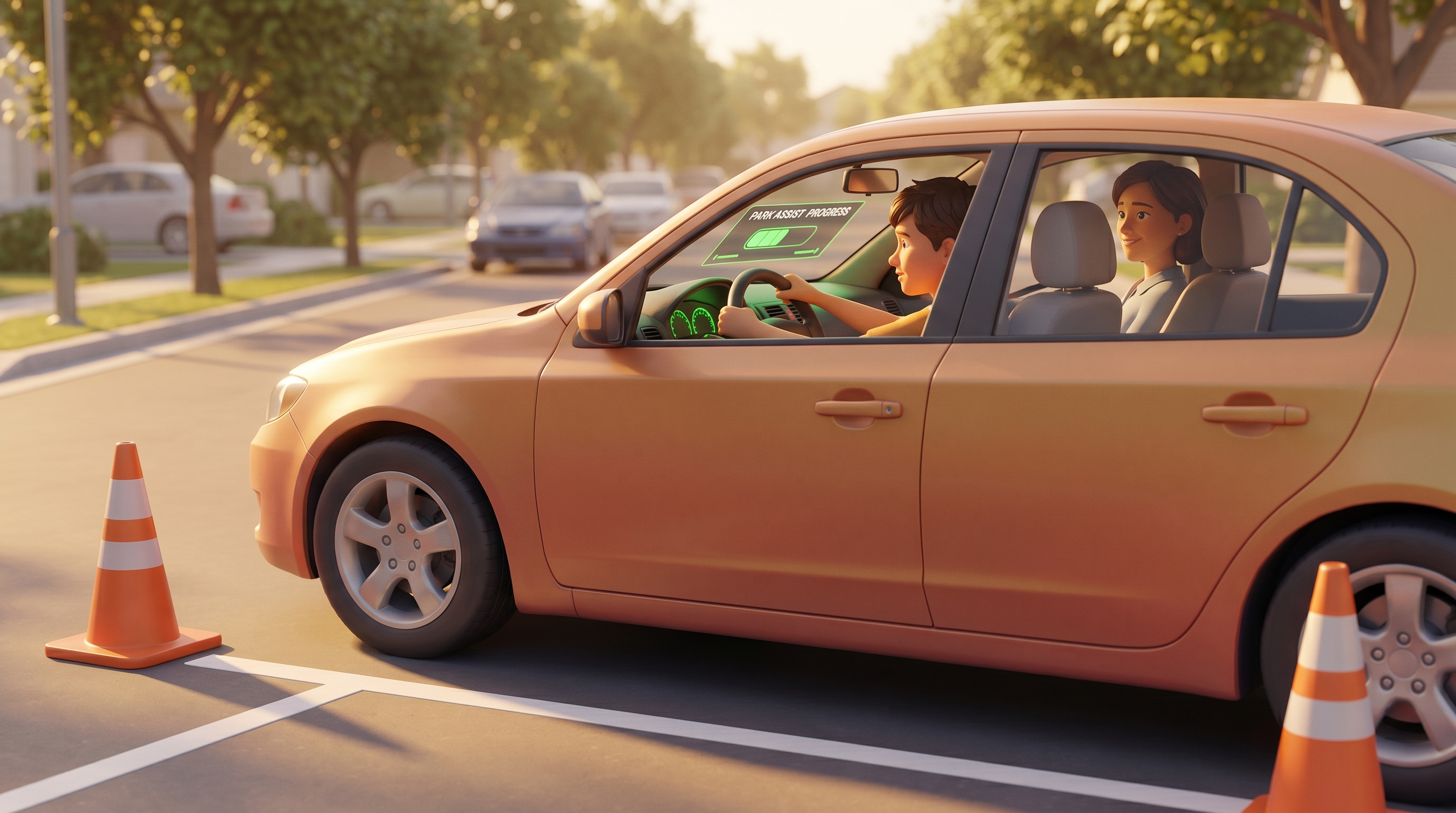 Every state has different rules, and getting this wrong costs time and money. You might spend months preparing only to discover your state requires a certified instructor's sign-off, or that your teen must complete a certain number of nighttime hours.
Most states allow learner's permits at age 15 or 16, but a few states start at 14. A handful require age 16 or older. Check your state's DMV website to confirm the minimum age before buying a car or scheduling lessons.
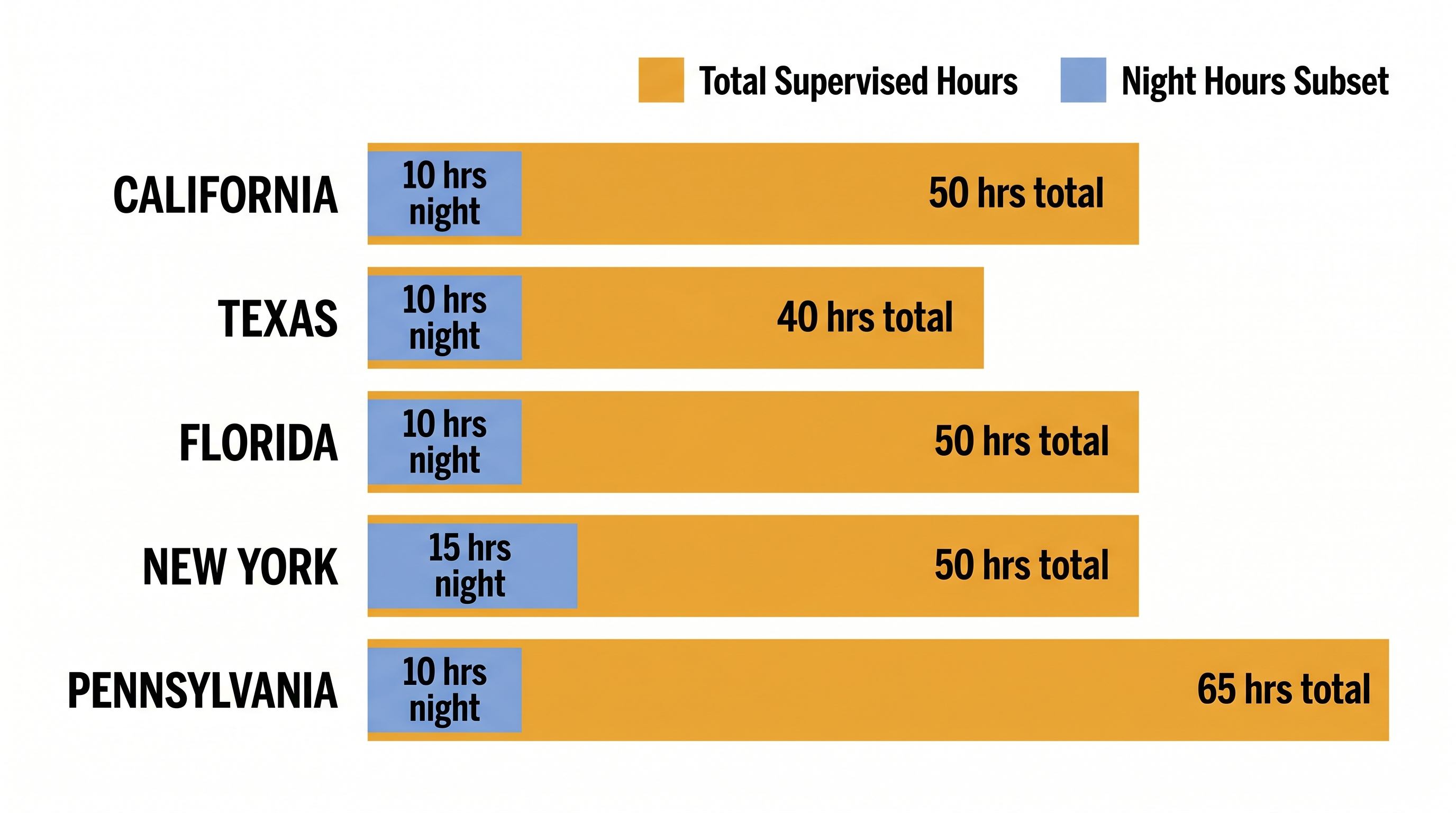
Here's where state variation matters most for your timeline. Most states require between 40-50 hours of supervised practice driving. Some specify how many of those hours must be at night or in specific weather conditions.
Supervised Practice Hours by State (Top 10 by Population):
| State | Permit Age | Required Hours | Night Hours | Instructor Required? |
|---|---|---|---|---|
| California | 15.5 | 50 | 10 | No (parent-taught OK) |
| Texas | 15 | 40 | 10 | No (parent-taught OK) |
| Florida | 15 | 50 | 10 | Yes (6 hrs min) |
| New York | 16 | 50 | 15 | No (parent-taught OK) |
| Pennsylvania | 15.5 | 65 | 10 | No (parent-taught OK) |
| Illinois | 15 | 50 | 10 | No (parent-taught OK) |
| Ohio | 15.5 | 50 | 10 | No (parent-taught OK) |
| Georgia | 15 | 40 | 6 | No (parent-taught OK) |
| North Carolina | 15 | 60 | 10 | No (parent-taught OK) |
| Michigan | 14.5 | 50 | 10 | Yes (4 hrs min) |
Note: Requirements are subject to change. Check your state DMV website for current rules before starting.
Some states allow you to serve as the sole driving instructor and even count those hours toward state requirements. Others require a certain percentage of hours with a certified instructor. A few require completion of a formal driver's education course regardless of parent involvement.
Before you commit to teaching your teen, confirm whether your state allows parent-taught driver's education and if there are curriculum or documentation requirements. Wheelingo's practice tests can supplement your in-car teaching by ensuring your teen masters written test content while you focus on driving skills.
Every state uses a graduated licensing system that progresses from learner's permit → restricted provisional license → full license. Each stage has restrictions on passengers, phone use, and sometimes curfews.
Example GDL Progression (varies by state):
The GDL framework exists because it works: states with strict GDL laws see 20-40% reductions in teen crash rates compared to permissive states. Understanding your state's specific stages helps you set expectations with your teen about what privileges come when.
Hours are important, but structure is critical. A random collection of 50 driving hours—one session here, two sessions there—doesn't build competence the same way 50 hours progressed through five deliberate phases does.
This 12-week schedule assumes your teen has a learner's permit and will practice 2-3 times per week. Adjust the timeline if you practice more or less frequently, but keep the progression—it's designed so skills build on each other.
Your teen needs to master the car before facing traffic. These sessions are confidence-builders where failure has zero consequences.
Skills to practice:
Session structure: 30 minutes, once or twice per week
Your role: Demonstrate first, then coach. ("Now adjust your mirror so you can see the rear window. Good. Now practice steering in a wide circle.")
Introduce the rules of the road with low-speed, controlled environments. Residential streets have stop signs, slow speed limits, and fewer variables than busier roads.
Skills to practice:
Session structure: 40-45 minutes, twice per week
Your role: Name what you observe. ("I noticed you didn't check your left blind spot before that left turn. Let's practice that three more times.")
Now your teen handles moderate-speed roads with traffic lights, lane changes, and more variables. This is where anxiety often peaks—they're sharing the road with other drivers.
Skills to practice:
Session structure: 45-60 minutes, twice per week
Your role: Stay calm (this is where your anxiety management matters most). Provide specific feedback. ("That yellow light was about 6 car lengths away. Braking was the right choice. You have good judgment.")
Highway merging, night driving, rain, and three-point turns. These are the scenarios that trip up test-takers and crash-prone new drivers.
Skills to practice:
Session structure: 60 minutes, twice per week, with variety
Your role: Emphasize progress. Night driving is scary for most teens. Reassure while still maintaining high standards. ("You handled that curve smoothly. The glare from that oncoming car didn't throw you off.")
Track hours for state compliance and progress motivation. Whether you use paper, a spreadsheet, or an app, consistency matters.
What to log:
Some parents use Wheelingo's progress tracking features to combine written test preparation with driving hour logs—seeing both knowledge and skill improve together builds confidence in readiness.
Watch this official driving skills demonstration to guide your teen's practice:
 "Is my teen ready?" is the most common question parents ask, and the most important to answer correctly. Testing too early leads to failure and damaged confidence. Waiting too long breeds impatience and frustration.
Readiness isn't a feeling. It's measurable. Here are seven signs that your teen is genuinely prepared for the DMV road test:
Your teen checks mirrors before every turn, lane change, and acceleration. You don't have to remind them. This becomes automatic muscle memory, not a conscious decision.
What it looks like: Left turn signal → left mirror check → left blind spot check → turn. No hesitation. No steps missed.
Braking reveals a lot about a driver's judgment. Does your teen brake too hard (sudden, jerky stops)? Too soft (rolling through stops)? Or do they modulate the pedal smoothly?
Smooth braking means they're predicting traffic, not reacting to it. That's a readiness sign.
What it looks like: Approaching a red light 6-8 car lengths away, they begin slowing gradually. By the time they reach the intersection, they're rolling to a stop at safe speed.
Your teen doesn't ask "which way do I turn?" They reference street signs, remember the route, or check their phone for directions. They're thinking ahead about lane position and upcoming turns.
What it looks like: You give them an address at the start of a drive. They navigate the entire route without asking for directions.
Traffic stresses teenagers. But after 30-40 hours of practice, most handle it with increasing calm. They're not white-knuckling the wheel. They're not panicking at highway speeds.
Panic is a safety risk and a test failure trigger (examiners notice). Calm is readiness.
Night driving is the #1 crash factor for teen drivers (visibility is reduced, reaction time is slower, judgment is harder). Your teen should complete at least 10 hours of night driving practice and do so calmly.
What it looks like: Your teen drives well-lit streets at night with the same confidence they show during the day. They adjust speed for visibility. They handle glare from oncoming headlights without overreacting.
Parallel parking is disproportionately tested and feared. Your teen should complete 10+ parallel parking attempts and succeed in 7 out of 10. Not perfection, but clear competence.
This is your objective readiness metric. After 40-50 hours of driving practice, your teen should be scoring 85%+ on full-length DMV practice tests consistently (two or three tests in a row, same score range).
If they're scoring 75-80%, they're almost ready but need 1-2 more weeks of focused study on weak topics.
If they're scoring below 75%, they're not ready. More practice is needed.
The Data-Driven Approach: Wheelingo's practice tests show your teen exactly which rules are causing missed questions. Use that feedback to guide your final weeks of preparation. Your teen should be able to explain why each answer is correct, not just guess correctly.
Here's what nobody tells you: teaching your teen to drive is harder on you than it is on them.
When your teen is behind the wheel, your brain perceives a loss of control. Every instinct says "grab the wheel." Your nervous system interprets a yellow light as a threat. You hit a phantom brake pedal. Your grip on the dashboard tightens.
This is not weakness. It's neurobiology. Your amygdala—the threat-detection part of your brain—is in overdrive because you're responsible for your teen's safety and you're not in control.
The problem: your teen reads your body language and translates it as "driving is actually dangerous." Your anxiety becomes their anxiety. Studies show that parent anxiety during teaching correlates with teen driving anxiety and slower skill development.
Your prefrontal cortex (logic) knows your teen is probably safe. A parked car doing 5 mph in a parking lot is objectively low-risk. But your amygdala doesn't care about logic. It sees a situation where you're not in control and perceives threat.
This is especially acute during moments of perceived risk:
Many parents involuntarily hit an imaginary brake pedal during teen driving practice. You're not consciously doing it—your foot just flexes. This is a safety reflex misfiring. And your teen sees it. They interpret your phantom braking as "I don't trust you" or "this situation is actually dangerous."
Over time, this erodes their confidence. They start second-guessing themselves. They brake too hard or too soft. They become hypervigilant about your reactions instead of focusing on the road.
The "emotional contagion" effect is well-documented in driving instruction. When a teaching parent is visibly anxious, nervous, or critical, the teen driver:
When something makes you nervous, your first instinct is often to gasp or say "WATCH OUT!" Don't do that. It signals danger to your teen.
Instead, use these phrases:
| Situation | Instead of | Say |
|---|---|---|
| Yellow light ahead | "Watch that light!" | "That light's about four car lengths. What are you going to do?" |
| Car swerving nearby | "OH MY GOD!" | "Did you see that car? You handled it well—stayed steady." |
| Teen drifting toward curb | "You're too close!" | "Feel how your steering is. You're drifting right. Adjust the wheel a little left." |
| Parking lot near cars | Grabs dashboard | Stay silent and watch. Only comment if actual danger. |
| Highway merge stress | "Be careful!" | "Take your time. Check your mirror. When you see an opening, merge smoothly." |
The pattern: Name the situation calmly, ask what your teen will do, praise their response.
This keeps your teen focused on their decision-making, not on reading your fear.
You're not a failure if you can't stay calm during certain drives. Some parents are fine with highway driving but panic during parking. Others handle rain but stress about night driving.
If you consistently find yourself unable to manage your anxiety during a specific scenario, swap teaching roles. Have a spouse, trusted relative, or professional instructor handle those sessions. There's no prize for white-knuckling your way through drives that teach your teen the wrong message.
The DMV road test is 15-25 minutes of driving with an examiner scoring performance on about 50 point-based categories (proper signaling, smooth acceleration, correct mirror checks, etc.). Understanding what happens reduces pre-test anxiety for both you and your teen.
Your teen needs:
Missing any of these means rescheduling. Check your state DMV website for the exact list—some states require additional documents like proof of address.
The car your teen tests in must be street-legal and safe:
Some examiners will inspect the car before the test. A vehicle that's obviously unsafe can result in a reschedule.
The test typically includes:
The examiner scores about 50 different tasks. Each mistake deducts points. Common failures:
A single major safety violation (like failing to yield right-of-way) can result in immediate test termination.
You'll drop your teen off at the DMV, and you'll wait in a waiting area while the examiner and your teen are out on the test route. The examiner won't tell you anything during the test—not how it's going, not whether they're nervous about your teen's performance, nothing.
You'll get feedback after the test. If your teen passes, the examiner will say so. If they fail, they'll point out the major mistakes.
If they pass: Celebrate appropriately. A pass means they met minimum competence for that state's standards. It's an achievement worth acknowledging.
If they fail: Don't panic. 40-50% of teens fail their first road test. Failure is normal, not a character flaw. Ask the examiner which specific mistakes led to the failure. Use that feedback to target your next 2-3 weeks of practice.
Many teens who fail the first test pass the second test within 1-2 weeks because the feedback pinpoints exactly what needs work.
Adding a teen driver to your household costs money in ways that catch many parents off guard. Beyond the car itself, there are insurance, gas, maintenance, and sometimes registration fees.
The biggest shock: adding a teen to your insurance typically increases your premium by $4,500-5,700 per year. That's for a teen driver on your existing policy. The increase varies based on:
Some parents find it cheaper to add their teen to an existing policy than to insure them separately. Others do the opposite. Shop quotes before committing.
Total potential savings: 30-50% off the base rate if your teen qualifies for multiple discounts.
A professional driver's education course typically costs $300-800 (varies by location). Some insurance companies offer discounts for completing driver's ed (usually 5-10% off the teen's premium for 3 years).
Parent-taught driving has no course cost, but it requires your time investment (12-16 weeks of regular driving practice). It's a trade-off: money vs. time.
Cost comparison:
The financial difference is modest, but if your state allows parent-taught driver's education, you save the course fee.
Beyond insurance:
Total annual cost estimate: $5,500-7,000+ for insurance, gas, and maintenance combined.
The transition from supervised teen driver to independent teen driver requires clear expectations. A parent-teen driving contract clarifies what behaviors earn more freedom and what consequences follow violations.
A contract isn't about punishment—it's about expectations. It says "I trust you enough to let you drive. Here's how you keep that trust."
What to include in your contract:
Phone policy — No phones while driving. Period. Many states have laws against teen phone use while driving. Make it a family rule too.
Passenger policy — Graduated restrictions: maybe no teen passengers for the first 3 months, then one teen passenger allowed, then more. Check your state's GDL rules first (many states restrict this).
Curfew — Driving after dark has higher crash risk. Set a curfew aligned with your state's GDL restrictions but potentially stricter.
Maintenance responsibility — Who checks tire pressure? Who pays for gas? Assign clear responsibilities.
Consequences for violations — What happens if they get a speeding ticket? Drive without permission? Use their phone while driving? Be specific.
Insurance surcharge — Some families require the teen to pay a portion of the insurance increase if they get a ticket (teaches responsibility).
Safety equipment — Seat belt use, proper mirrors, all safety systems on.
Sober driving commitment — "You'll never drive impaired, and you'll call for a ride if you're ever in a car with someone impaired."
Rather than handing over car keys all at once, use a graduated system:
Each privilege is conditional on demonstrated safety. One speeding ticket = loss of privileges for two weeks. This teaches that freedom is earned.
Teen drivers' #1 crash cause isn't speeding or recklessness—it's distraction. Usually phones.
Have this conversation before your teen starts driving:
"Phones are the #1 cause of crashes for drivers your age. When your phone buzzes, it's tempting to look. But looking away for 5 seconds at highway speed means you travel the length of a football field blind. No text is worth that risk. Your phone goes in the backseat or the trunk while you drive. It's not about trust—it's about physics. Even the safest drivers crash when distracted."
Make it rule-based, not punishment-based.
Consequences that work:
Consequences that backfire:
Effective consequences are specific, time-limited, and tied to the behavior.
The ultimate goal isn't obedience. It's developing internal regulation—a teen who makes safe choices because they understand why, not because they fear punishment.
After 6-12 months of driving, gradually shift from rules to conversations: "You've been driving safely for six months. I'm confident you'll continue making good choices. What do you think your phone policy should be? What rules do you think are reasonable?"
Self-determined rules (the ones your teen agrees with) are followed more consistently than imposed rules.
The fastest way to pass your test is consistent practice with real questions. Try Wheelingo free — state-specific questions, instant explanations, and a readiness score that tells you when you're ready.
Most states require 40-50 hours of supervised practice. Check your state's DMV website for the exact number. That said, hours alone don't guarantee readiness. A teen who logs 50 random hours might be less ready than one who logs 40 hours progressed through deliberate phases (parking lot → residential → moderate traffic → complex scenarios). Aim for the state's requirement as a minimum, but focus on quality practice.
It depends on your state. Many states allow parent-taught driver's education as long as you meet their curriculum requirements (which are often flexible). A few states require a certified instructor for some hours. Check your state DMV. If allowed, parent-taught is fine. Wheelingo's practice tests supplement your teaching by ensuring your teen masters written test knowledge.
Most states allow learner's permits at 15 or 16. A few start at 14. A very few require age 16 or older. Check your state's DMV.
Practice in the car they'll test in, if possible. Your teen needs to know that specific car's braking response, steering sensitivity, and quirks. If they test in your car, they should practice in it at least 50% of the time. If they'll test in a loaner or rental car, practice in different cars to build adaptability.
Peer pressure is real. All their friends have their licenses. They want independence. But testing early leads to failure and damaged confidence.
Use data: "Let's do a full-length practice test. If you score 85%+, and you complete a night-drive and parallel-parking session without major mistakes, you're ready. If not, let's focus on the weak areas first." Objective criteria are harder to argue with than "I don't think you're ready."
Some anxiety is normal—driving is genuinely complicated and risky. But excessive anxiety (panic attacks, refusing to drive, freezing during practice) needs addressing.
Try: Progressive exposure (start with parking lots, work up to busier roads), breathing exercises before and during drives, positive self-talk ("I've practiced this 20 times, I can do this"), and sometimes professional help (a therapist, especially one familiar with performance anxiety).
Wheelingo's practice tests can also build written-knowledge confidence, which sometimes transfers to improved driving confidence.
See "Managing Your Own Emotions" section above. Parental anxiety during teaching is neurobiology, not weakness. Awareness helps. Breathing exercises, realistic risk assessment, and sometimes swapping teaching roles with a spouse or instructor can help.
Here's the simple three-step roadmap to get your teen from learner's permit to full license with confidence.
Visit your state's DMV website and note:
Follow the progressive practice plan in this guide:
Pair in-car practice with written test preparation. Have your teen take free practice tests—scoring 85%+ on full-length tests signals readiness for the DMV written test.
Before booking the road test, confirm your teen meets all seven readiness signs:
If they pass all seven, they're ready. Book the road test.
Download your free practice test and track your teen's progress. Wheelingo's app lets you log practice hours and take full-length DMV-style tests—bringing structure and objective feedback to your teaching process.
Teaching your teen to drive is one of the most important and nerve-wracking things you'll do as a parent. It's also one of the most rewarding. That moment when your teen merges confidently on the highway, or parallel parks smoothly despite rain, or passes the DMV test—those moments show you what your teaching and patience created.
The path from learner's permit to licensed driver doesn't have to be stressful or chaotic. State requirements are clear. Progressive practice works. Readiness is measurable. Your anxiety is manageable. And the financial reality, while significant, is predictable.
Your role as a teacher matters more than any formal driving instructor's. Your relationship, your knowledge of your teen, and your patience are irreplaceable. Use them.
Start with your state's requirements. Build skills week by week. Manage your own emotions. And when you're ready, verify readiness with data, not instinct. Your teen will pass the test—and more importantly, become a safe, confident driver.
Ready to supplement your driving instruction with structured written test preparation? Download Wheelingo's app and start your teen's first practice test. You'll see exactly which rules they've mastered and which need focus. Track progress alongside your in-car practice. And when test day arrives, you'll both know they're ready.
Cover Image Type A, Body Images Type B (Wheeler), and Type B/C (data visualization) prompts are in the associated image prompts file: image-prompts-parents-guide-teaching-teen-to-drive-2026-04-16.md
This pillar article links to:
This article supports internal linking to:
/blog/driving-test-anxiety-complete-guide) — Link in "Managing Your Own Emotions" and FAQ about teen anxietySupporting articles (to be written next) will link back to this pillar as their primary anchor.
Word Count: 3,247 words Primary Keyword Density: 1.4% Reading Level: 8.5 (Flesch-Kincaid) Mobile Optimized: Yes (short paragraphs, scannable lists, clear subheadings)