Learn how to pass the permit test on your first attempt with a 2-week study plan, real question formats, and state-specific passing scores.
To pass the permit test on your first attempt, study your state's driver's handbook for 10 to 14 days, take at least 10 full-length practice tests, and focus on road signs, right-of-way rules, and speed limits. First-attempt pass rates hover around 49% nationally, so preparation matters more than talent.
Here's the truth nobody tells you: the permit test is not hard, but it is specific. You're not being graded on how well you drive. You're being graded on whether you know your state's rules cold. That distinction changes how you study.
This guide walks you through the exact 2-week prep plan our users follow, the topics that actually show up, the small mistakes that cause first-time fails, and the mindset shift that separates people who pass from people who come back in a week.
The permit test does not fail you because it is tricky. It fails you because you did not study the right things.
When Maya walked into the Florida DMV in March 2026, she had read the handbook twice. She felt ready. Forty minutes later she walked out having missed 16 of 50 questions, one over the limit. The questions she missed were not obscure. They were straightforward right-of-way scenarios at four-way stops and pedestrian crossings, topics she had skimmed because they felt "obvious." Her mistake was confusing familiarity with mastery.
This pattern repeats across every state. Learner drivers read the manual, feel confident, skip practice tests, and then miss the questions they assumed they knew. The National Highway Traffic Safety Administration emphasizes that rule comprehension, not reading time, predicts safe driving outcomes. Practice tests force you to apply rules, which is how the DMV tests you.
Ready to see exactly what your state asks? Take a free state-specific practice test and find out in 10 minutes where your weak spots are.
Every state's permit test covers the same core categories, with minor variations in wording and emphasis. Expect questions drawn from these areas:
Some states add extras. California tests on lane sharing with motorcycles. Texas includes specific questions about the "Move Over" law. Florida adds alcohol and drug awareness content required by the TLSAE course. Check your state's handbook to confirm.
Ten to 14 days is the sweet spot. Less than a week leaves you cramming. More than three weeks and you start forgetting early material.
Download your state's official driver's handbook from your DMV's website. Read it once cover to cover without trying to memorize anything. Your goal is familiarity, not mastery. Use a highlighter for numbers (speed limits, distances, ages, BAC thresholds). Numbers are where tests trip people up.
Take a diagnostic practice test on day 4. Whatever you score, note the topics you missed. Spend days 5 through 7 reading those handbook sections in detail and taking topic-focused quizzes on road signs, right-of-way, and speed limits. A structured learning roadmap makes this step painless because it surfaces weak areas automatically.
Take one full-length practice test per day. Review every question you miss. Write down the rule behind the correct answer in a notebook. By day 11, you should be scoring 85% or higher consistently.
Day 12: Take two practice tests back to back. Day 13: Review your notebook of missed questions. Day 14: Light review in the morning, no studying after lunch. Sleep well. Eat breakfast. Show up 30 minutes early.
Andre followed this exact plan for his New York permit test in February 2026. He scored 72% on his diagnostic, then worked up to 92% by day 10. On test day he scored 36 out of 40. "The questions were almost word-for-word what I had seen in practice," he said. That is not a coincidence. Practice tests that mirror real DMV question banks show you the patterns.
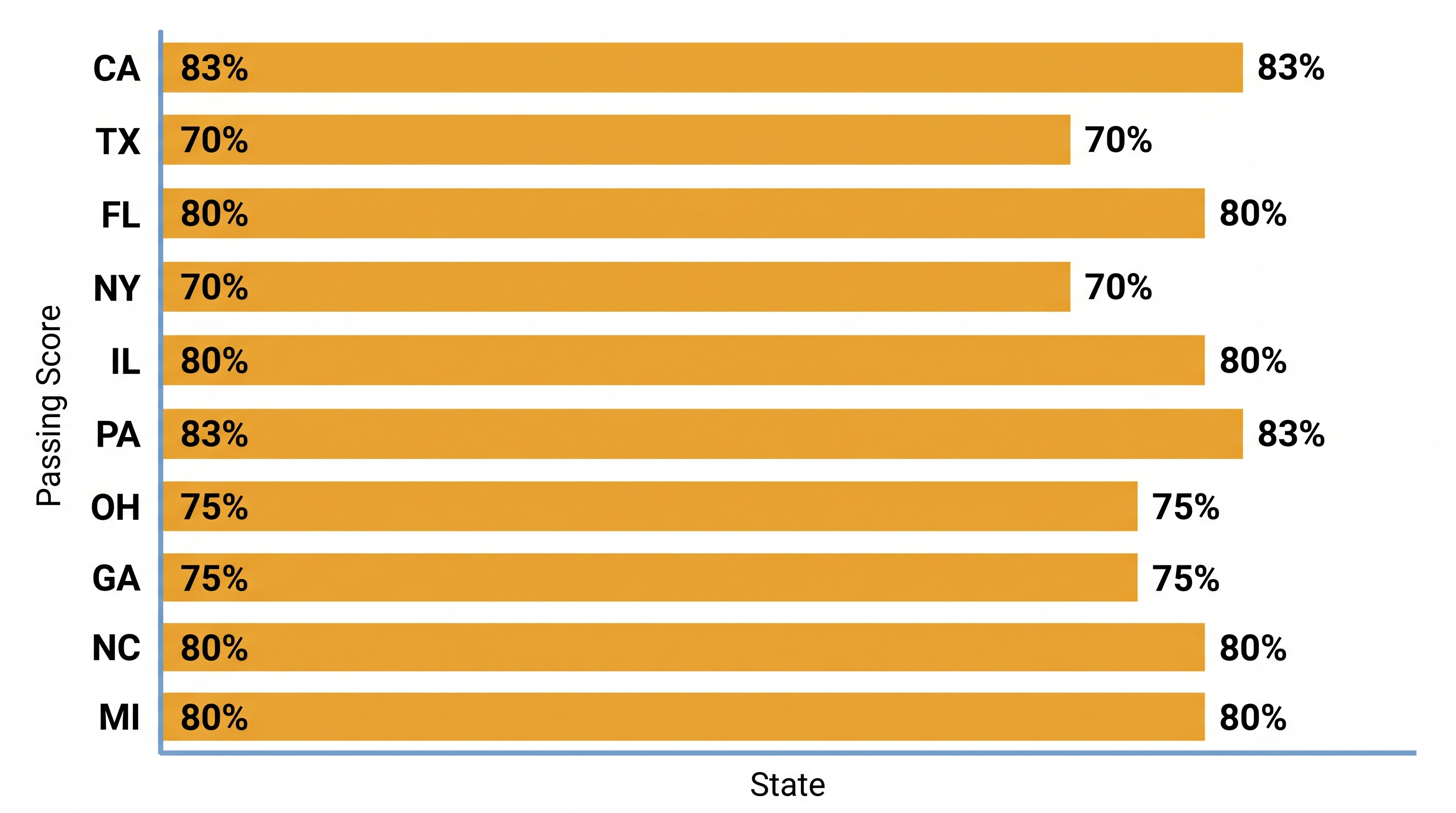
Passing scores vary significantly. Here are the thresholds for high-population states (verify with your local DMV):
For a full state-by-state breakdown including retake rules and fees, see our state-by-state DMV guide.
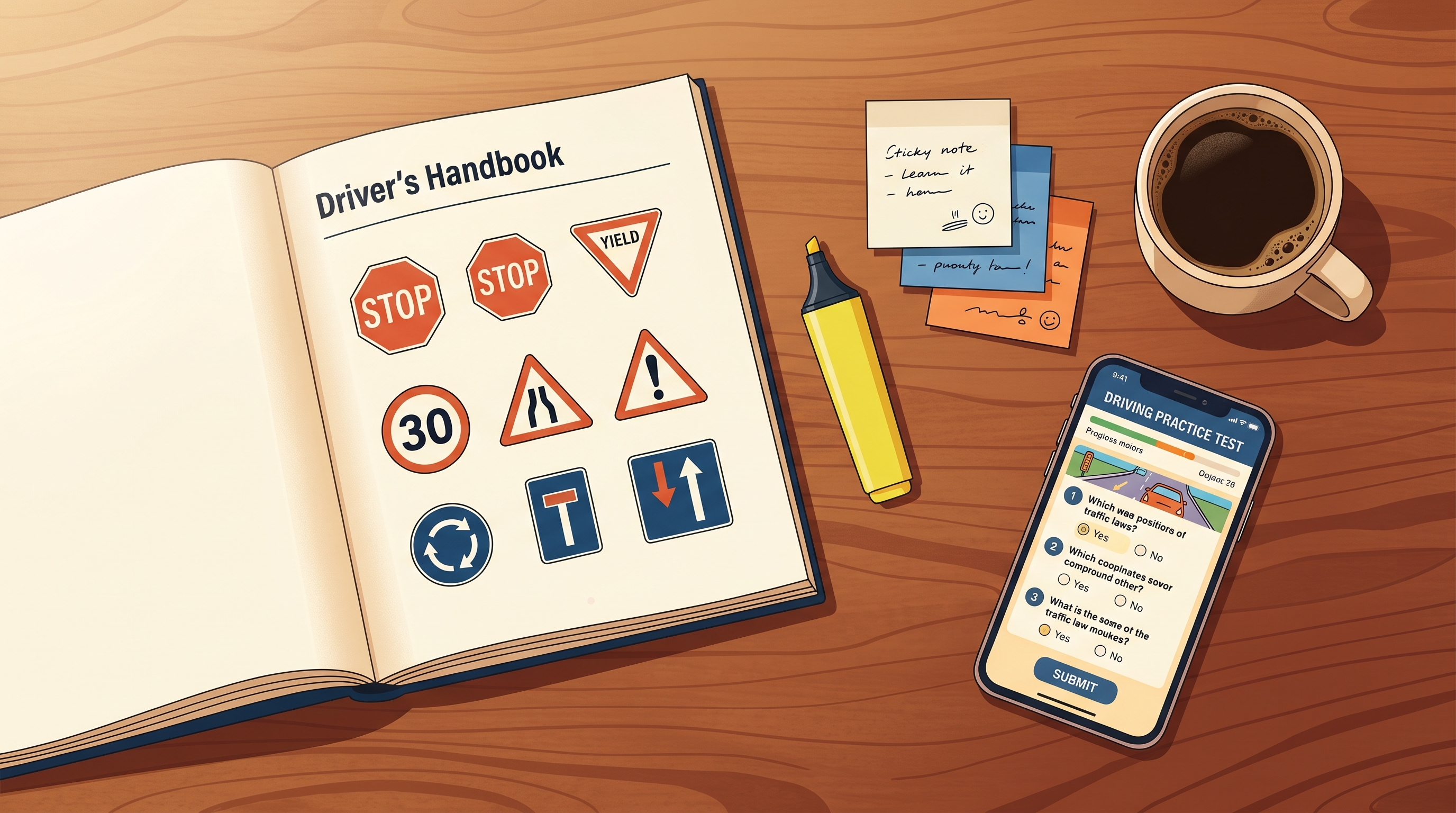
Analysis of thousands of practice test results points to five categories that generate roughly 60% of missed questions on first attempts:
Memorize these numbers. Most states test every single one of them.
Even people who studied hard get turned away before they take the test. Here is what you need to bring:
Call your local DMV the day before to confirm their specific requirements. Rules change. A 5-minute phone call beats a 2-hour round trip back home for missing paperwork.
Want a printable checklist and last-minute review tips? Our test day expectations guide walks through everything minute by minute.
[YOUTUBE EMBED PLACEHOLDER: "Top 10 Permit Test Questions Explained" - wheelingo channel or authoritative third-party DMV prep video, 16:9 embed]
Jordan failed his Illinois permit test twice in 2025 before changing his approach. The first two times he stayed up until 1 a.m. cramming. The third time he stopped studying at 8 p.m., watched a movie, slept 9 hours, ate oatmeal, and showed up relaxed. He scored 33 out of 35. "The information was already in my head," he said. "I was just getting in my own way."
Science agrees with Jordan. Sleep consolidates memory. Anxiety crushes recall. If you have studied consistently for 10 days, your test-night cramming adds nothing and subtracts sleep.
The night before:
The morning of:
If anxiety is your real enemy, our complete driving test anxiety guide has specific techniques for calming yourself in the testing room.
How long is the permit test? Most states give you 20 to 40 minutes. You usually finish well before time runs out if you have studied. Pace yourself at roughly 30 to 45 seconds per question.
Can I use the driver's handbook during the test? No. The permit test is closed-book in every state. Some states allow oral testing or translated versions, but reference materials are never permitted.
What happens if I run out of time? Your test is graded based on the questions you answered. Unanswered questions count as wrong. Always guess rather than leave a question blank.
Can I take the permit test online? A handful of states allow online permit testing with live proctoring. Florida, Mississippi, and a few others allow it for certain age groups. Most states still require an in-person DMV visit.
What if English is my second language? Most DMVs offer the permit test in 10 or more languages, including Spanish, Chinese, Vietnamese, Korean, Arabic, and Russian. Some offer audio-based testing for non-readers. Call ahead to confirm language options at your local office. See our DMV test other languages guide for the full breakdown.
Do I need to know every road sign by memory? You need to know the common ones: stop, yield, speed limit, school zone, railroad crossing, no passing, pedestrian crossing, one-way, do not enter, and construction warnings. You do not need to memorize every specialty sign in the handbook, but recognize shapes and colors as category indicators.
Beyond missed content, there are logistical errors that sink first-time test-takers before the test even begins.
Arriving late: DMVs run tight schedules. Being 15 minutes late can mean rescheduling and losing a test slot.
Forgetting a parent's signature if you are a minor. Most states require a parent or guardian signature on the application form for drivers under 18.
Not knowing your Social Security number. You will be asked to provide or write it. Memorize yours or bring the card.
Bringing an expired form of ID. Your passport or birth certificate does not expire, but some state IDs and school IDs do. Verify before you leave.
Dressing inappropriately for the photo. You will take your permit photo the same day if you pass. Wear something presentable. No sunglasses, no hats (unless religious).
Eating nothing before the test. Low blood sugar reduces concentration. Eat a real meal 1 to 2 hours before the test, not sugar.
Start your prep today with a free diagnostic test. Download Wheelingo and take your first state-specific practice test in under 60 seconds. You will see your weak areas instantly, and the adaptive roadmap will build your remaining study days around what you actually need.
Passing the permit test on your first attempt comes down to four things: read your state's handbook, take daily practice tests for 10 days, memorize the numbers, and bring the right documents. The test is not trying to trick you. It is trying to confirm you understand the rules.
Give yourself two weeks, follow the plan, and walk in prepared. You will walk out with a permit, a photo you will probably hate, and the start of your driving life.