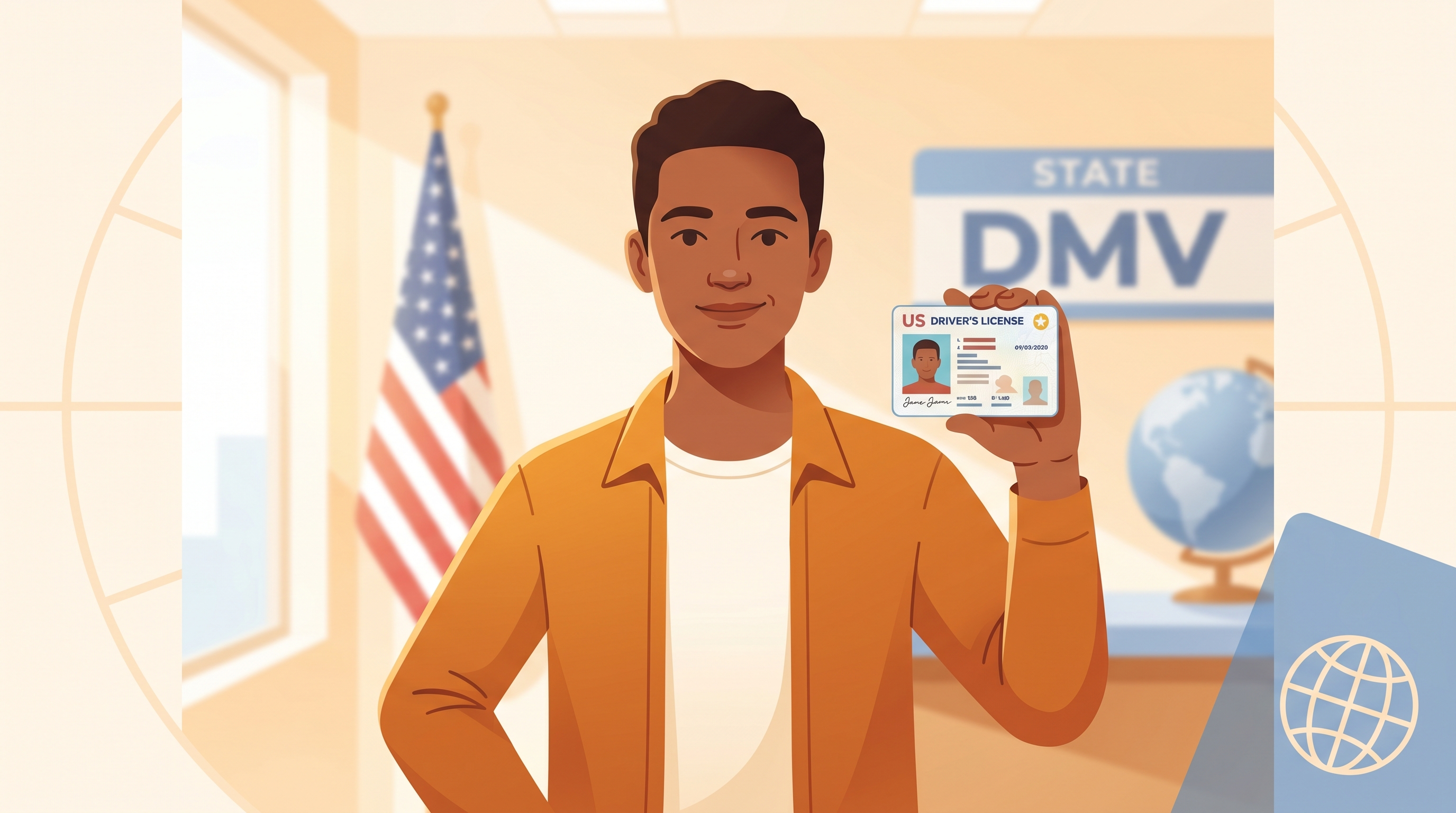
New to the US? Learn how US road rules differ from your home country, how to pass the DMV test, and which states accept foreign licenses.
Passing the US driving test as an immigrant usually requires a written knowledge test and a road test in the state where you live, unless your home country has a license-transfer agreement. The bigger challenge for most new arrivals is not the rules themselves but the small cultural differences: right-on-red, 4-way stops, school bus laws, speed-limit enforcement by camera, and the sheer size of American roads. With 3 to 6 weeks of focused prep, most immigrants pass on the first attempt.
You learned to drive in your home country. The fundamentals are the same: signals, mirrors, staying in your lane. But the US has quirks that are rarely explained well on state DMV websites. Some states allow a direct license transfer from your country. Most require both tests. And a few rules, like stopping completely for a school bus with flashing red lights on a 2-way street, are genuinely unique.
This guide walks through what changes from country to country, which states have license agreements, the exact documents you'll need, and how to prepare for the written and road tests. If you want to check your readiness right now, a free Wheelingo practice test lets you compare your knowledge to what your state's DMV actually tests.
It depends on three things: your current license, your state, and how long you've been in the US.
A few US states have formal agreements with specific countries. If you have a valid license from one of these countries, you can transfer directly without a road test (and sometimes without a written test):
Always verify on your state DMV site. Agreements expire and change.
If your country isn't on the reciprocity list, you'll take the same path as a US resident:
Your existing driving experience almost always lets you skip the long supervised-hours requirement that teens face.
If you're in the US for less than 90 days (some states allow 6 to 12 months), you can often drive on your home country's license plus an International Driving Permit (IDP). The AAA International Driving Permit page explains how to obtain one.
Our drive US foreign license guide goes deeper on the short-term rules by state.
Ready to see how US-specific your knowledge is? Take a free Wheelingo practice test in your state's exact format and see which topics to focus on.
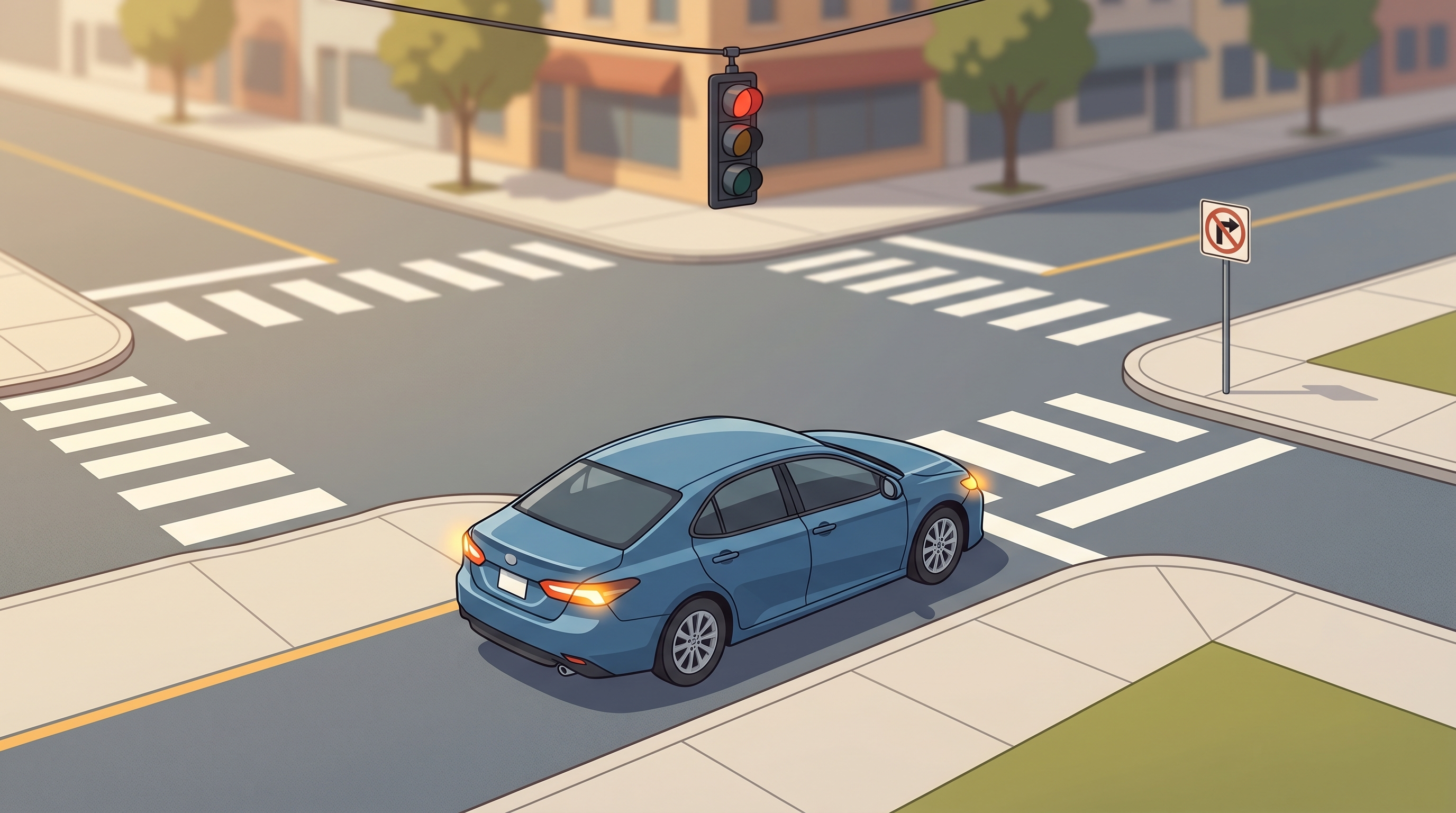
These are the rules that catch new arrivals, based on feedback from thousands of Wheelingo users and Reddit threads in r/newtocanada, r/immigration, and state-specific DMV communities.
In the US, you can turn right at a red light after coming to a complete stop, unless a sign says "No Turn on Red." In most countries outside the Americas, this is illegal.
The rule:
Common mistakes: rolling through, turning when a pedestrian has the walk signal, and turning where a sign prohibits it.
New York City and a handful of other places ban right-on-red by default. Always read the signs.
A 4-way stop is a rare sight in most countries. In the US, they're everywhere.
The rule: first to stop, first to go. If two cars arrive at the same time, the one on the right has right-of-way. Make eye contact, be decisive, and don't wave people through. Your examiner and other drivers want clear, predictable behavior.
When a school bus stops with its flashing red lights and extended stop sign, traffic in both directions must stop on a regular 2-way road. On a divided highway with a physical median, only traffic on the bus's side must stop.
Violations carry huge fines ($250 to $1,000+) and points on your license. This rule is unique to the US and Canada.
Speed limits in the US are posted as maximum speeds. Many drivers treat them as suggestions (plus 5 to 10 mph). On your road test, drive the exact posted limit. Going under can also fail you ("impeding traffic"). Going over fails you faster.
Speed traps and camera enforcement vary by state:
Keep right except to pass. The left lane is for passing on highways. You can get pulled over in some states (Georgia, Illinois) for cruising in the left lane.
On the road test, examiners watch for proper lane use, smooth lane changes with mirror + signal + shoulder check, and staying in your lane through curves.
Pedestrians have the right-of-way in any crosswalk, marked or unmarked, at any intersection. In California, this is enforced strictly. Not stopping for a pedestrian entering the crosswalk is an automatic fail on most road tests.
Pull over to the right and stop when emergency vehicles approach with lights or sirens. This is universal, but US drivers take it seriously and examiners watch for it.
Story: Carlos from Barcelona, now in Austin. Carlos, 32, had driven in Spain for 12 years. "In Spain, right turns on red don't exist. So the first time a car behind me honked because I was waiting at a red to turn right, I was confused." He failed his first Texas road test because he did a rolling stop at a residential 4-way. He passed on the second try after a 1-hour lesson focused on "full stops," 4-way etiquette, and school bus rules. "The hardest part was not the driving, it was the differences I didn't know existed."
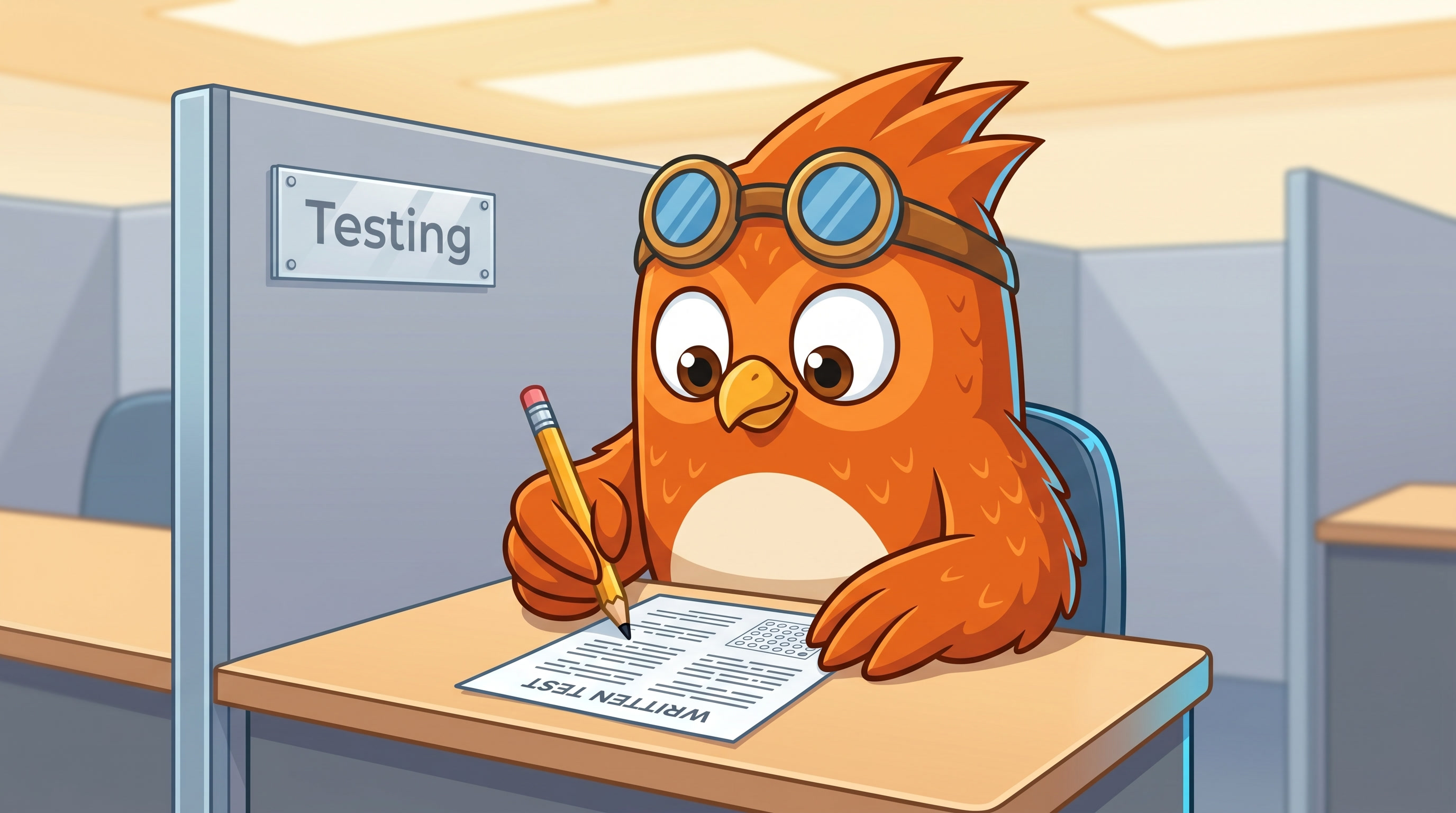
Every state's DMV gives a written knowledge test. Format and passing score vary:
| State | Questions | Passing Score | Languages Available |
|---|---|---|---|
| California | 46 | 38/46 (83%) | 30+ languages |
| Texas | 30 | 21/30 (70%) | English, Spanish, Vietnamese |
| New York | 20 | 14/20 (70%) | 14+ languages |
| Florida | 50 | 40/50 (80%) | 17+ languages |
| Illinois | 35 | 28/35 (80%) | 14+ languages |
| Washington | 40 | 32/40 (80%) | 7+ languages |
| Georgia | 40 | 30/40 (75%) | English, Spanish |
Most states allow you to take the test in your native language. Common available languages include Spanish, Chinese (Simplified and Traditional), Vietnamese, Korean, Tagalog, Russian, Arabic, French, Japanese, and Punjabi. Our DMV test other languages guide lists exactly what's available by state.
What the written test covers:
Effective 2-week prep plan:
Our how to study for DMV written test guide has the full 14-day plan.
Story: Amara from Lagos, now in Houston. Amara, 29, had driven in Nigeria for 5 years. "The road signs I knew, but the traffic laws were totally different." She used Wheelingo's Spanish-adjacent practice bank for Texas, plus daily 30-minute review of the Texas Driver Handbook. She scored 28/30 on her first Texas test. "The practice questions were exactly the format of the real test. No tricks."
US road tests are shorter than in most European and Asian countries. Expect 15 to 20 minutes, with about 20 to 30 scoring items.
Standard test route elements:
Common automatic fails:
Items that lose points but don't fail:
Our common reasons fail road test article breaks down the exact point deductions and how to avoid them.
Most states require a learner's permit before the road test, even for experienced immigrant drivers. Requirements vary, but expect:
Documents:
Common supervised practice rules:
Immigration status matters: Some states (California, Colorado, Connecticut, Illinois, Nevada, New Mexico, New York, Oregon, Utah, Vermont, Washington, and others) issue driver's licenses or driving privilege cards to residents regardless of immigration status. Others require legal presence. The AAA licensing map has a current overview.
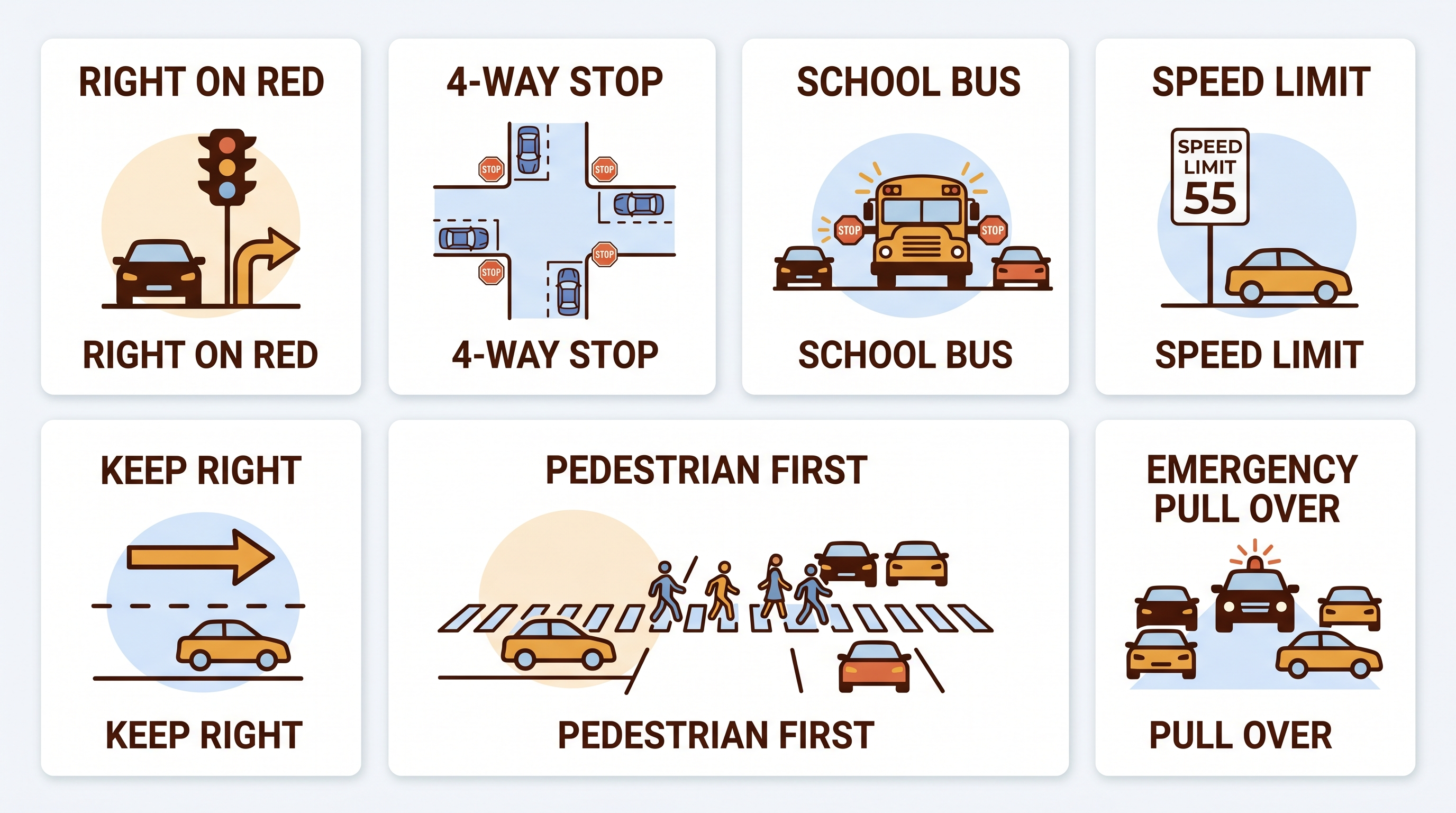
Our driving US vs Europe and driving US vs India comparisons break down each region in detail.
We'll replace this placeholder with a 12-minute walkthrough.
Story: Priya from Mumbai, now in San Jose. Priya, 35, had 10 years of experience driving in India. She failed her first California road test for not doing a full stop at a 4-way and for wide right turns. "I was driving on autopilot from Mumbai habits." For her second attempt, she took 2 hours with a local instructor who drilled her on full stops and tight right turns. She passed. "The examiner said 'you are a safe driver, you just needed to look more American for 20 minutes.'"
Can I drive in the US with my foreign license? Short-term yes, usually up to 90 days to 12 months depending on the state, if you have an International Driving Permit. Long-term residents must get a US license.
Which countries have license reciprocity with US states? Germany, South Korea, Taiwan, France, Canada, and others with specific states. Always verify on your state DMV site.
Can I take the DMV test in my language? Most states offer the written test in multiple languages. The road test is always conducted in English or with basic English instructions. Some states allow a translator for written tests but not road tests.
How long does it take to get a US license as an immigrant? Usually 2 to 6 weeks from permit to full license if you're an experienced driver and pass on the first try. Budget 2 to 4 hours for DMV appointments and testing.
Is the US driving test hard for immigrants? The test itself is straightforward. The adjustments to right-on-red, 4-way stops, school bus rules, and pedestrian priority are what trip people up. With 1 to 2 professional lessons and 2 weeks of practice tests, most immigrants pass.
The US driving test isn't harder than most countries. It's just different in ways that aren't obvious until you're behind the wheel. The written test is manageable in your native language with 2 weeks of practice. The road test is shorter than you expect, but it tests specific US rules (full stops, right-on-red, school buses, pedestrian priority) that your home country may not.
Three moves get most immigrants to a pass: confirm whether your country has reciprocity, refresh the US-specific rules with state-format practice tests, and take 1 to 2 hours with a local instructor before your road test.
Ready to start? Download Wheelingo for practice tests in your state's exact format with visual explanations, or browse our state-specific DMV pages to see what your local test covers. Your driving experience is an asset. A few weeks of focused prep translates it into a US license.