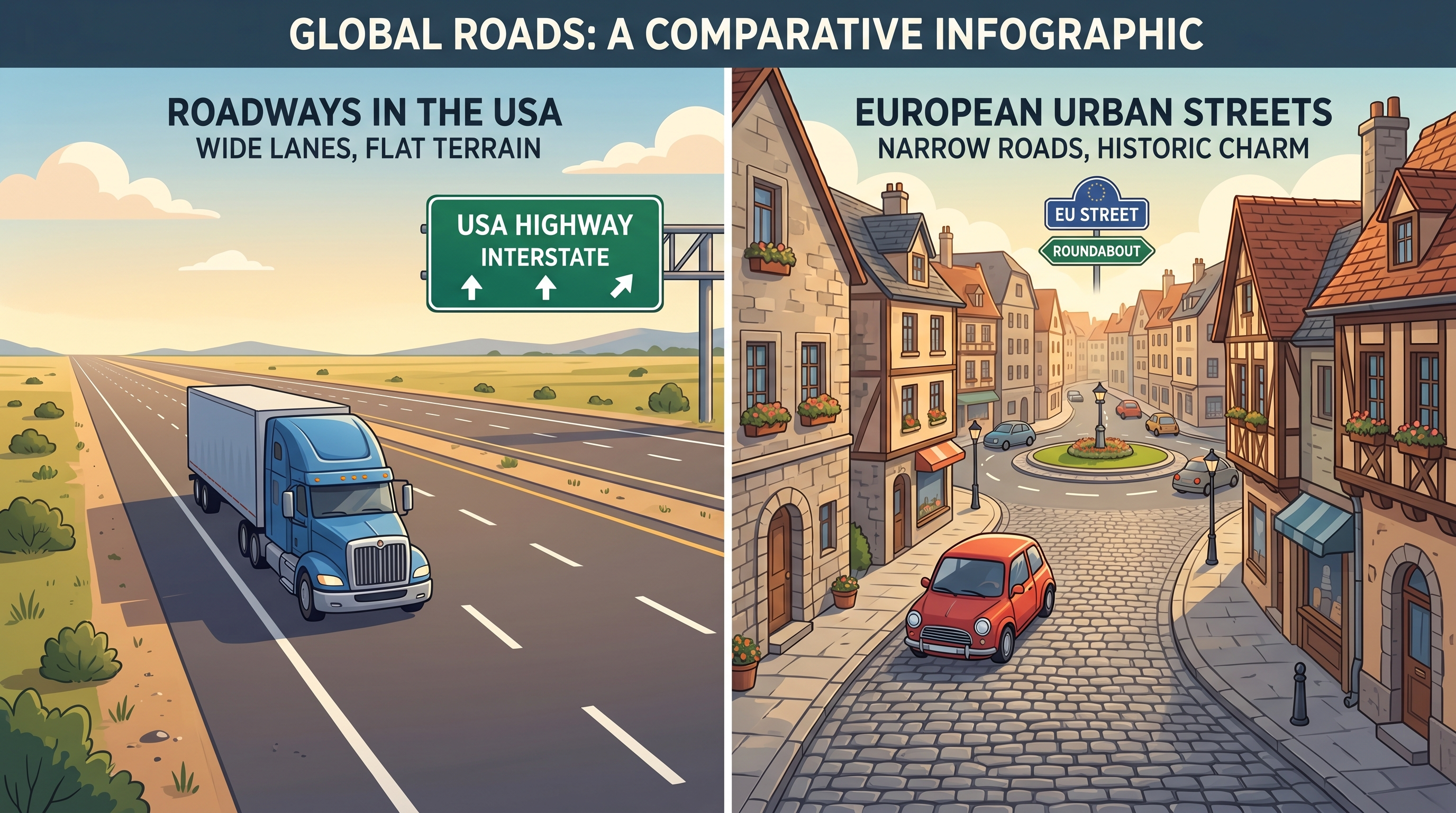
Learn critical differences between driving in the US and Europe. Road rules, licensing, insurance, and more for expats relocating to America.
Moving from Europe to the United States? Driving habits, road rules, and licensing requirements are dramatically different—and many European drivers are surprised by what they find behind the wheel in America. Whether you're relocating for work, family, or a fresh start, understanding these differences is essential for passing your DMV test, staying safe, and avoiding costly violations.
In the first 100 words, we'll explore why US driving requires a fundamentally different mindset: American roads emphasize speed and distance over efficiency, traffic laws vary wildly by state, and the testing system is far less rigorous than European standards. European drivers accustomed to narrow streets, roundabouts, and strict emissions controls must adapt to wide highways, four-way stops, and a culture where driving is often a necessity rather than a convenience.
The American Road System
US highways are designed for speed and volume. Interstate highways are typically divided, limited-access roads with on/off ramps, wider lanes, and gentler curves. Speed limits on interstates range from 65–75 mph depending on state and conditions. However, once you leave the interstate, you'll encounter:
European Motorways and Local Roads
European roads prioritize density and efficiency. Motorways (autobahns, autoroutes, etc.) have higher speed limits (110–130+ km/h, or 68–81+ mph) but narrower lanes. City driving and regional roads are far more congested, with:
Maria's Story: "I Nearly Missed My Exit"
Maria, a 34-year-old marketing director from Berlin, relocated to suburban Massachusetts in 2025. "In Germany, I'd exited motorways thousands of times," she recalls. "But American exits sneak up on you—they're often on the right, with minimal warning. I nearly missed mine on I-95 because I was used to European signage systems. The first month was stressful, but once I understood the pattern, it became automatic."
| Factor | United States | Europe |
|---|---|---|
| Interstate/Motorway Limit | 65–75 mph | 110–130 km/h (68–81 mph) |
| Urban Speed Limit | 25–45 mph | 50 km/h (31 mph) |
| School Zones | 15–20 mph | 30 km/h (19 mph) |
| Speeding Ticket Cost | $150–$500+ | €30–€300+ |
| Red Light Camera Fines | $75–$400 | €60–€200 |
| Enforcement Density | High (visible patrols) | Variable by country |
Key Differences in Enforcement
The US prioritizes visible enforcement. Speed traps, traffic cameras, and police traffic stops are common on busy roads. A 10 mph overage in a 35 mph zone can result in a $200+ ticket. In Europe, enforcement varies dramatically: Germany's autobahns have minimal speed enforcement, while France and Spain use aggressive camera systems. However, exceeding the limit by 5–10 km/h is often overlooked in Europe but rarely forgiven in the US.
Additionally, the US tracks violations closely for insurance purposes. A single speeding ticket can increase your car insurance by 20–30% for three to five years.
American Traffic Control
The US relies heavily on traffic lights and traffic signs. Key surprises for European drivers:
European Traffic Control
European traffic systems emphasize yielding and reciprocal respect. Differences include:
US Vehicle Requirements
The US has a fragmented approach to emissions and vehicle standards:
European Vehicle Standards
Europe enforces uniform emissions standards across the EU:
US Driver Licensing
Each state has its own licensing system:
European Driver Licensing
European licenses are standardized across EU member states:
Thomas's Story: "The DMV Was a Shock"
Thomas, a 28-year-old software engineer from Amsterdam, passed his Dutch driving test on his second try—after 48 hours of professional instruction and months of private study. When he moved to California in 2024, he expected the US test to be similarly rigorous. "The written test was straightforward," he says. "But I was shocked that the driving test was only 15 minutes and mostly involved parking and basic turns. In the Netherlands, you're tested on motorway driving, night driving, and complex traffic scenarios. The bar felt much lower, but I appreciated the efficiency."
US Parking Culture
Parking is plentiful and cheap in the US, particularly outside major cities:
European Parking Reality
Parking is scarce and expensive in European cities:
American Driving Ethos
European Driving Ethos
For European Drivers Relocating to the US:
The fastest way to pass your test is consistent practice with real questions. Try Wheelingo free — state-specific questions, instant explanations, and a readiness score that tells you when you're ready.
Q: Can I drive in the US with my European driver's license? A: Yes, temporarily. Most states recognize foreign licenses for up to 12 months, but you'll need an International Driving Permit (IDP) as supporting documentation. If you plan to stay longer or establish residency, you must obtain a US driver's license.
Q: What is an International Driving Permit, and do I need one? A: An IDP is an official translation of your foreign license issued in your home country. While many US states don't strictly require it, it's recommended as secondary proof of your driving authority, especially for car rentals or police stops.
Q: Is the US driving test harder or easier than European tests? A: Generally easier. US tests require less comprehensive knowledge—no motorway or night driving scenarios. The written test is shorter, and the practical test is shorter and less rigorous.
Q: How much does US car insurance cost compared to Europe? A: US insurance is typically $800–$1,500 annually for basic coverage, compared to €400–€800 in Europe. Costs vary by state, age, driving record, and vehicle type.
Q: Can I transfer my European insurance to a US policy? A: No. You must purchase a new US insurance policy. Many insurers offer discounts for drivers with no recent violations in your home country; ask when requesting quotes.
Q: What happens if I get a speeding ticket as a visitor or new resident? A: Tickets are issued and tracked. If you're a resident, it affects your driving record and insurance. If you're a visitor, your home country's insurance company may still increase rates, or you may face issues when establishing US residence.
Transitioning from European to American driving requires more than just memorizing traffic laws—it demands a mindset shift. American roads are wider, straighter, and often faster. Traffic control is more rigid. Enforcement is more visible. And licensing standards are less rigorous but equally important.
The good news? You have time to prepare. Whether you're taking the DMV written test or simply adjusting to driving on US roads, understanding these differences puts you ahead. Start with your state's specific rules—they vary more than you might expect—and use a comprehensive DMV practice test resource like Wheelingo to master the rules of your state before test day.
Ready to pass your DMV test on the first try? Get started with Wheelingo's state-specific practice tests and join thousands of new drivers who passed with confidence.