What happens during a panic attack while driving. Learn grounding techniques, how to refocus, and when to pause your test safely.
You're halfway through your DMV driving test. Everything feels fine. Then suddenly, your chest tightens. Your vision narrows. Your hands shake on the wheel. It feels like you can't breathe, like the walls of the car are closing in. Your mind goes blank. The examiner's voice sounds distant. You freeze.
Panic attacks during driving tests are more common than you think—and they're survivable. Unlike a heart attack (which lasts hours), a panic attack peaks and subsides within 10–20 minutes. But that window feels like an eternity when you're behind the wheel.
This guide walks you through what a panic attack actually is, what happens in your brain and body, and most importantly: what you can do in the moment to regain control and pass your test.
A panic attack is an abrupt surge of intense fear or discomfort, peaking within minutes. It feels like:
Here's what makes panic attacks unique: they're not triggered by actual danger. You're not in a car crash. The examiner isn't hostile. You're in a controlled, safe environment. Yet your nervous system treats your DMV test like a life-threatening emergency.
This happens because your amygdala (fear center) and your thinking brain (prefrontal cortex) are momentarily disconnected. Your amygdala floods your bloodstream with cortisol and adrenaline. Your nervous system goes into fight-or-flight mode. Your body is preparing to run from a predator or fight an attacker—not to parallel park.
The critical fact: A panic attack cannot harm you physically. It feels terrible—terrifying, even—but it is not dangerous. You will not have a heart attack. You will not lose consciousness. You will not "go crazy." Your panic will peak and subside, usually within 20 minutes.
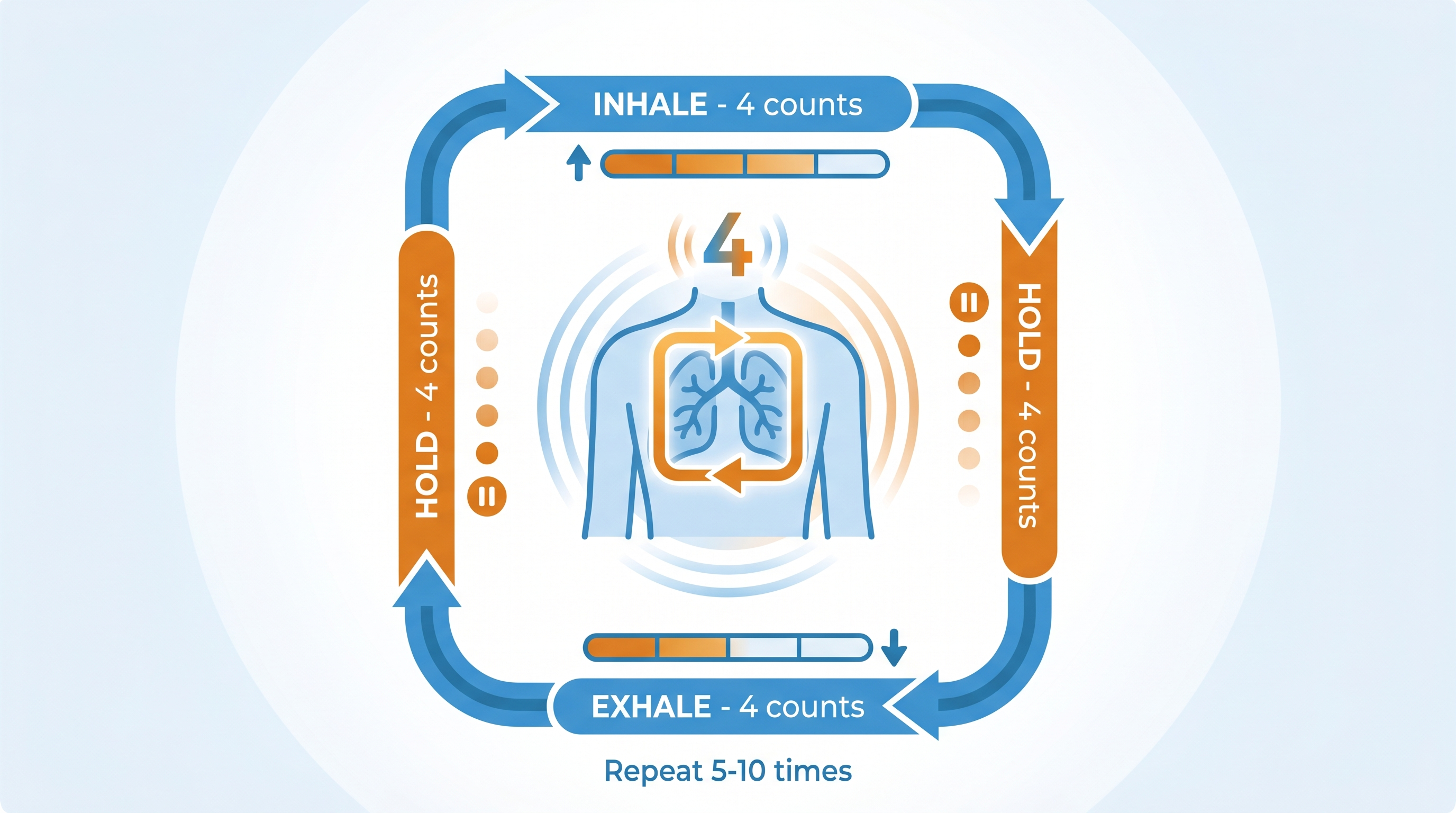 Understanding what's happening in your body helps you respond rationally instead of reactively.
Stage 1: The Trigger (0–30 seconds) An internal or external trigger activates your amygdala. For test-takers, triggers might include:
Stage 2: The Cascade (30 seconds–2 minutes) Your nervous system activates. Your brain floods with epinephrine (adrenaline) and cortisol. Within seconds, you feel:
Stage 3: The Peak (2–10 minutes) Your sympathetic nervous system is fully activated. This is the worst moment—but also the shortest. You feel maximum fear and physical discomfort. Most people want to escape (the urge to pull over, get out of the car, run away). Your thinking brain is offline. You might freeze, lose track of driving instructions, or make errors.
Stage 4: The Plateau (10–15 minutes) Your body begins to realize there's no actual threat. The adrenaline surge can't sustain indefinitely. Your symptoms stabilize or slightly improve. You might feel exhausted but more present.
Stage 5: The Resolution (15–20 minutes) Your nervous system downshifts. Breathing slows. Heart rate drops. Muscles relax. You feel drained but relieved. By this point, the test is usually over (most driving tests last 25–35 minutes).
| Timeline | What's Happening | What You Feel |
|---|---|---|
| 0–30 sec | Trigger activates amygdala | Sudden unease, heart flutter |
| 30 sec–2 min | Adrenaline and cortisol surge | Racing heart, shallow breath, tingling |
| 2–10 min | Peak sympathetic activation | Terror, chest tightness, tunnel vision, urge to escape |
| 10–15 min | Adrenaline plateau | Slightly better but exhausted |
| 15–20 min | Parasympathetic activation begins | Breathing slows, heart rate drops, calming |
| 20+ min | Return to baseline | Relief, fatigue, embarrassment |
You're not broken or weak. Several factors collide at the DMV to trigger panic:
1. Perfectionism + High Stakes A driving test is pass/fail. There's no partial credit. This creates maximum pressure. If you're someone who ties your self-worth to performance, or who fears failure intensely, panic is more likely.
2. Loss of Control In daily life, you control your driving. On a test, an examiner controls the route, the tasks, the rules. This loss of control triggers anxiety and hypervigilance (watching for threats). Hypervigilance exhausts your nervous system.
3. Evaluation Apprehension (Fear of Being Judged) The examiner is literally judging you. Even if they're friendly, their presence creates a spotlight effect. Social anxiety amplifies panic risk.
4. Previous Failed Attempts If you've failed before, your amygdala has learned: "This situation = failure, shame, disappointment." Your nervous system is now more reactive to this specific trigger.
5. Baseline Anxiety Disorders If you have generalized anxiety disorder, social anxiety disorder, or panic disorder, your nervous system is already primed for panic. Your amygdala is overactive, and your threshold for triggering a panic response is lower.
The good news: None of these factors are permanent. Panic attacks are treatable, and your nervousness won't follow you forever.
The best time to intervene is before panic fully erupts. Learn to recognize the early signs:
If you notice 2–3 of these signs before peak panic, you can intervene immediately and prevent full-blown panic. This is your golden window.
When panic starts, your thinking brain is offline and your instinct is to escape. Grounding techniques pull you back into the present moment and your body, bypassing the amygdala's hijack.
This is the fastest way to interrupt panic while driving.
How to Do It:
Why It Works: This engages all five senses and activates your prefrontal cortex (thinking brain). While you're listing sensory details, your amygdala's fear signal quiets. You're anchoring yourself to the present, concrete reality—not the imagined future threat of failure.
When to Use: At the first sign of panic. Do this while continuing to drive. It takes 2–3 minutes and requires no special equipment.
Humans have a reflex called the mammalian dive reflex: when cold water touches your face, your body slows your heart rate and drops your blood pressure. This is built-in panic relief.
How to Do It:
Why It Works: The cold triggers an immediate parasympathetic response (calming). Your heart rate drops within 30 seconds. This is faster than any breathing technique.
Caution: If you're already driving, don't take your hands off the wheel. Ask the examiner for a quick bathroom break if possible. Or wait for a red light, quickly apply ice, and resume driving.
Real Example: Raquel, 22, felt panic hitting during her test—racing heart, tight chest. She remembered the ice trick and asked the examiner for a bathroom break. She held her ice cube pack against her wrist for 30 seconds, felt her heart rate drop immediately, and came back to the car calmer. She passed the test.
Tensing large muscle groups (especially legs and feet) activates your vagus nerve and grounds you in your body.
How to Do It:
Why It Works: Progressive muscle tension interrupts the fight-or-flight response. Activating your legs signals to your nervous system: "We're grounded, we're safe, we're not running." Your amygdala calms down.
When to Use: While driving, especially at stops (red lights, stop signs). You can do this subtly—the examiner won't notice.
Real Example: James, 26, felt panic climbing during his driving test. When he came to a stop sign, he tensed his legs and feet for 5 seconds, then released. The physical action broke his panic spiral. He continued driving and passed.
A variant of breathing, but faster-acting than standard breathing because the cold air itself triggers the dive reflex.
How to Do It:
Why It Works: Cold air on your face and throat activates parasympathetic response. You also get the benefit of controlled breathing.
When to Use: Anytime during the test when panic spikes. Takes 30 seconds.
Sometimes the most powerful intervention is simply telling the truth.
What to Say:
Why It Works: Naming the anxiety and asking for help reduces shame and activates your executive function. You're no longer white-knuckling through panic alone. The examiner has likely seen this before—they may be more compassionate than you expect.
When to Use: When panic is peaking and grounding techniques aren't enough. A 2-minute bathroom break can drop your cortisol enough to finish the test.
Note: Most DMV tests are designed to be pausable. You won't fail for asking for a moment. You might fail if you panic so severely you can't drive safely.
Don't hold your breath. Your instinct might be to "control" your breathing by holding it. This backfires. Holding your breath increases CO2 in your blood and amplifies panic sensations. Keep breathing, even if it feels shallow.
Don't fight the panic. Resisting anxiety creates more anxiety. Instead of saying "Stop, go away," say "I notice this panic. I'm safe. It will pass." Acceptance is paradoxically more powerful than resistance.
Don't leave the car if panic is manageable. If you can safely continue driving, do so. The panic will peak and drop. If you stop, you might reinforce the panic response and make it harder next time.
Don't catastrophize the panic. Your amygdala might be screaming "Something's wrong! You're dying! Get out!" This is false. Your panic is biochemical, not predictive. You're safe. You're okay.
Don't take this as a sign you can't drive. Panic during a test does not mean you're unsafe to drive. Plenty of people experience test anxiety but drive safely every day. This is about nervousness, not competence.
Sometimes panic is so severe you genuinely cannot continue. This is rare, but it happens. Here's what to do:
If panic attacks are severe or frequent, professional support is necessary and highly effective.
Cognitive Behavioral Therapy (CBT) — Most effective for panic disorder. A therapist helps you identify panic triggers, challenge catastrophic thoughts, and rebuild confidence. 8–12 sessions often show significant improvement.
Exposure Therapy — A therapist gradually exposes you to the feared situation (driving, test-like conditions) in a safe, controlled way. Your nervous system learns: "This situation is not dangerous." Works exceptionally well for test anxiety.
Medication — If panic is severe, a psychiatrist might prescribe:
Talk to your doctor. These are evidence-based tools, not weakness.
Somatic Therapy / Trauma-Informed Therapy — If your panic is linked to past trauma (previous test failure, car accident, general trauma), somatic therapy helps your nervous system process and release stored fear.
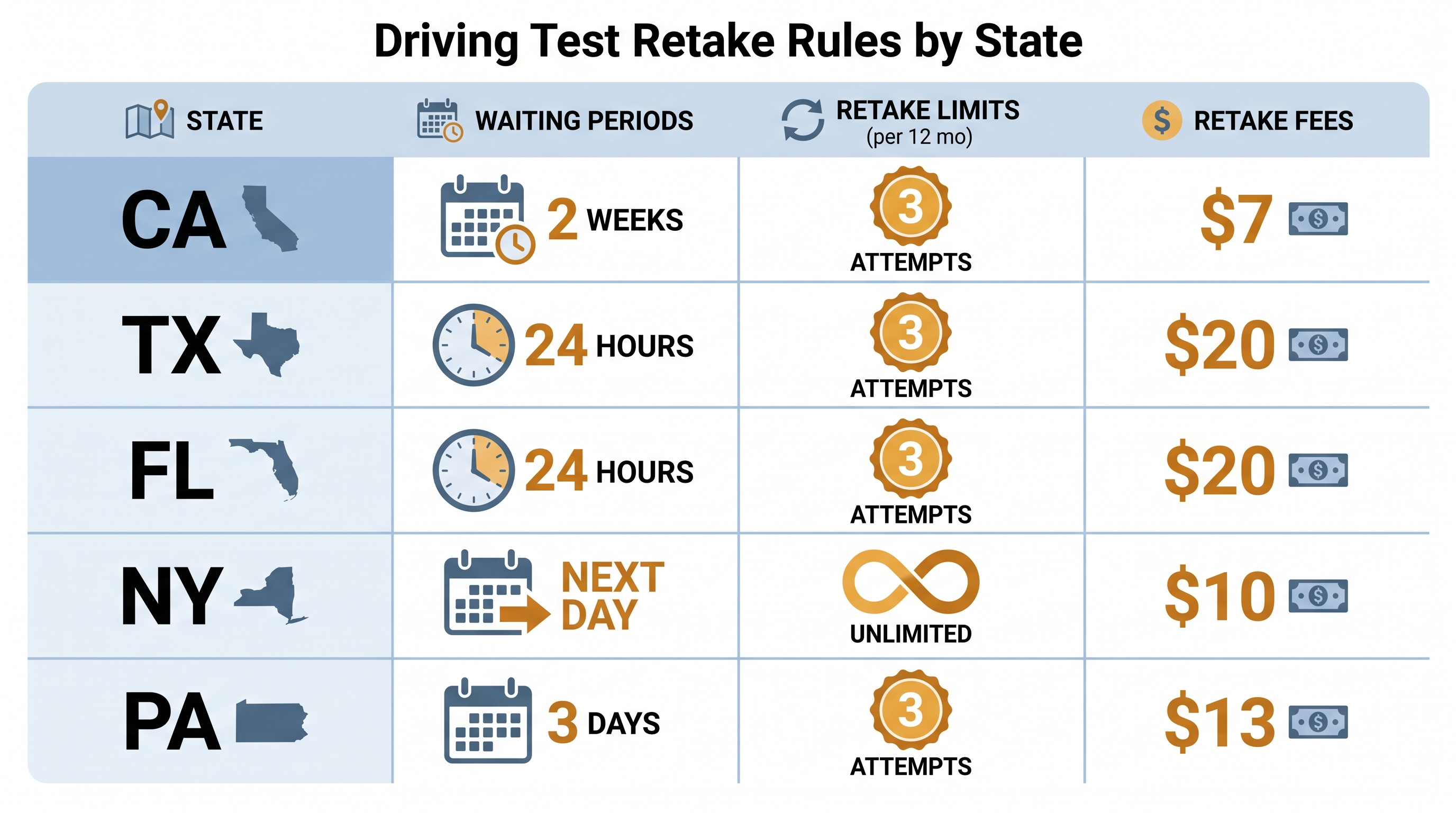
| Week | Focus | Action | Goal |
|---|---|---|---|
| Week 1 | Stabilization | Learn grounding techniques daily; work with therapist if possible | Reduce panic severity by 30–40% |
| Week 2 | Practice | Daily grounding + breathing practice; low-stress test simulation | Increase confidence; catch panic early |
| Week 3 | Exposure | Supervised driving with supportive person; simulate test conditions | Build real-world practice and evidence |
| Week 4 | Re-test | Full DMV test with all tools in place | Pass or learn specific weak points |
| Post-test | Integration | Celebrate success or plan next attempt with updated strategy | Ongoing nervous system health |
The fastest way to pass your test is consistent practice with real questions. Try Wheelingo free — state-specific questions, instant explanations, and a readiness score that tells you when you're ready.
Q: Can a panic attack cause you to faint or pass out while driving? A: Extremely rarely. Panic raises blood pressure and heart rate—the opposite of fainting. Fainting requires a sudden drop in blood pressure. Some people feel lightheaded during panic, but actual loss of consciousness is very uncommon. If you do feel faint, pull over safely immediately.
Q: Will the examiner think I'm crazy or report me if I have a panic attack? A: No. Examiners are trained to recognize test anxiety. They won't report you for mental health issues. They may pause the test or offer accommodations. Most will be sympathetic.
Q: Is one panic attack during a test a sign I have panic disorder? A: One panic attack in response to a stressor (the DMV test) does not mean you have panic disorder. Panic disorder involves repeated, unexpected panic attacks. One attack is situational anxiety, not disorder.
Q: Can I take anti-anxiety medication before the test? A: Talk to your doctor. Short-term medications like propranolol (beta-blocker) can reduce physical panic symptoms without impacting your cognitive ability to drive. Never self-medicate or use someone else's medication.
Q: What if I can't stop the panic cycle? A: If grounding, breathing, ice, and examiner communication don't work, it's okay to pause or stop the test. You will be safe. You can try again. There is no shame in needing professional support first.
Q: How do I know if my panic is "real" anxiety or just normal test nerves? A: Normal test nerves = mild racing heart, butterflies, slight tension. Panic attack = intense fear with physical symptoms (chest pain, difficulty breathing, dizziness, terror). Panic feels like a medical emergency. Nerves feel like excitement. If you're unsure, talk to a mental health professional.
Marcus, 28 (Third Attempt) Marcus had failed twice. His second failure triggered a panic attack mid-test: racing heart, tunnel vision, urge to escape. He asked to stop and sat in silence for 5 minutes. He recovered but failed the test again. For his third attempt, he saw a therapist for 4 weeks and learned 5-4-3-2-1 grounding. On test day, he felt panic rising at one point but used the grounding technique. He caught it early enough that it didn't escalate. He passed.
Sophia, 19 (Generalized Anxiety Disorder) Sophia had been on sertraline (SSRI) for anxiety for 2 years. She still felt panicky before her driving test. She added therapy (CBT) 6 weeks before her test. She practiced grounding and breathing daily. On test day, she felt some anxiety but recognized it and applied her tools. The panic didn't escalate. She passed.
Raquel, 22 (Situational Panic) Raquel's panic during her first attempt was completely unexpected—she'd never had a panic attack before. After failing, she researched panic and realized her body was just stressed. She practiced ice contact and breathing for 2 weeks. On her second attempt, she felt panic starting but immediately held ice and did grounding. Panic subsided. She drove the rest of the test cleanly. Passed.
Panic attacks are terrifying, but they are not dangerous. They are not a sign of weakness. They are not a sign you can't drive. They are your nervous system overreacting to stress—and overreaction is fixable.
If panic hits during your test, use grounding techniques: 5-4-3-2-1, ice contact, feet pressure. These work fast. If panic is severe, ask for a bathroom break. If panic forces you to stop, that's okay—try again in a few weeks with professional support.
You have the tools to survive panic. And you have the capability to pass your test.
Panic attacks thrive on avoidance and worry. The antidote is real-world practice and evidence that you can drive safely. Wheelingo provides realistic driving simulations with immediate feedback, so you can build skills and confidence before your test.
Start practicing with Wheelingo today—no sign-up required. The more you practice, the less power panic has over you.