The 25 road signs most frequently missed on DMV tests. Learn why drivers fail these questions and how to remember them for test day.
When the DMV publishes aggregate pass rates by question, certain road sign questions consistently fail high percentages of test-takers. These aren't the easiest signs—pedestrian crossing, stop, yield—that most drivers recognize. They're the signs that live in the category between "I've seen it before" and "I have no idea," or signs whose correct interpretation requires understanding context rather than just recognizing a symbol. This guide identifies the 25 signs that appear most frequently on failed DMV questions, explains why drivers miss them, and teaches you the details that separate passing from failing. Master these 25 and you'll avoid the majority of sign-based mistakes on your test.
The signs on this list aren't harder than others; they're simply more frequently misunderstood. Some require you to recognize the difference between two similar signs. Others require you to apply context—the same sign means different things in different places. A few are simply forgotten because they're less common in everyday driving. By studying this list, you're focusing on the exact material that trips up actual test-takers.
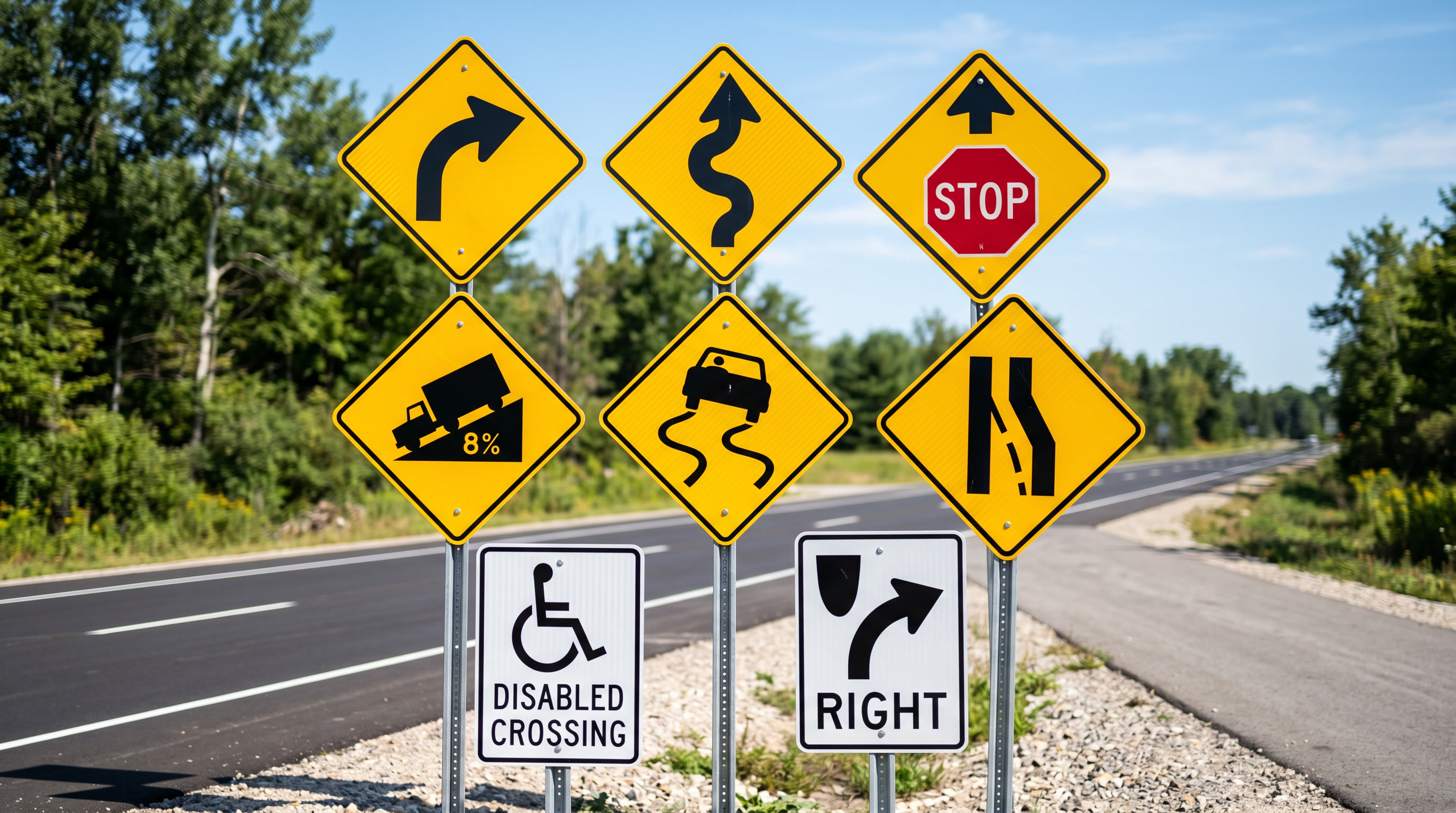
Why It's Missed: These two yellow diamonds look similar but mean different things. Curve Ahead shows one curved arrow and signals a single turn; Winding Road shows multiple curves or a snake-like pattern and signals several turns in succession.
The Detail: On Curve Ahead, you reduce speed for one turn. On Winding Road, you reduce speed and stay focused for multiple miles of turns. The DMV asks: "You see a winding road sign. Should you reduce speed?" (Yes.) "You see a curve ahead sign. Should you reduce speed?" (Yes.) Then: "Which one indicates a longer section of turns?" (Winding Road.) Many test-takers mix these up because they're both yellow diamonds with arrow symbols.
How to Remember: Winding Road = many curves (wind-ing) over distance. Curve Ahead = one curve coming.
Why It's Missed: This sign is less common than No Passing zones marked by pavement lines. Many drivers see it and think "That's about pavement markings," not "That's its own sign." Additionally, the sign appears on roads where passing is dangerous but not marked by center lines.
The Detail: A Do Not Pass sign explicitly forbids passing. Unlike a solid yellow pavement line, which might be challenged ("Is it absolute?"), a Do Not Pass sign is absolute. The DMV question format: "You see a 'Do Not Pass' sign. Can you pass?" The answer is "No, never." Many drivers fail this because they're thinking about pavement markings instead of sign meanings.
How to Remember: This sign looks like a prohibition sign (red/white) with two overlapping arrows. It appears where passing is particularly dangerous even though pavement markings might not indicate it.
Why It's Missed: It's not the sign itself that causes confusion; it's the DMV's questions about speed limits. Test questions ask: "You see a speed limit sign showing 55 mph. Can you drive 60 mph in light traffic?" The answer is no—you cannot exceed the posted limit, even if conditions are safe. Many drivers fail because they think "safe" overrides "legal." It doesn't.
The Detail: Speed limits are not suggestions; they're mandatory maximums. You cannot legally drive above the posted limit. The only exception is when a police officer directs you to proceed faster (rare and not testable). On residential streets, school zones have reduced limits (often 15–25 mph) and the DMV emphasizes these.
How to Remember: The sign is simple (a white rectangle with a number), but remember: you cannot exceed it legally, even if it feels safe.
Why It's Missed: This sign appears on divided highways and tells left-lane drivers to move right after passing. Many drivers don't understand that the left lane is a passing lane, not a cruising lane. The DMV tests whether you know to move back to the right after passing.
The Detail: On multi-lane highways, the left lane is for passing and turning left. After passing, you must return to the right lane. Keep Right Except to Pass signs reinforce this. Drivers who miss this question often think left lanes are equal to right lanes and that staying in the left lane is acceptable as long as you're going the speed limit.
How to Remember: Left lane is for passing; move back to the right when done. The sign is a reminder that the left lane is special—not a permanent home.
Why It's Missed: Many drivers don't distinguish between "Merge Ahead" and "Road Narrows." Both show similar imagery, but they require different responses. Merge means two roads are combining into one; Road Narrows means your lane is shrinking but the road continues as a single lane.
The Detail: On Merge Ahead, traffic from one direction is flowing into your lane. You should stay in your lane and allow merging traffic to integrate. On Road Narrows, your lane is getting narrower but you're not gaining traffic from another direction. The questions the DMV asks: "You see a merge sign. Should you speed up to prevent other traffic from merging?" No. "Should you slow down and create space?" Yes. This reveals the distinction: Merge requires courtesy; Road Narrows requires awareness of changing lane width.
How to Remember: Merge = incoming traffic; create space. Road Narrows = same traffic, less room.
Why It's Missed: The confusion is not about the sign itself but about what "yield" means in context. At a yield sign on an entrance ramp to a highway, does yielding mean you wait indefinitely, or do you accelerate to merge? Many test-takers think a yield sign means "you never proceed," which is wrong.
The Detail: Yielding means you give priority to traffic already on the highway, but you still proceed when safe. On entrance ramps, you accelerate on the ramp to match highway speed, find a gap, and merge. The DMV question: "You're on an entrance ramp with a yield sign. What should you do?" The answer is "Accelerate to match highway speed and merge when safe," not "Stop and wait." Many drivers fail because they overinterpret "yield" as absolute stopping.
How to Remember: Yield = give priority; doesn't mean don't go. You still proceed when safe.
Why It's Missed: This sign is straightforward, but questions about it often involve scenarios. "You're on a divided highway with a 'No U-Turn' sign. Can you drive to the next exit, turn around, and drive back?" The answer depends on where you turn. You cannot turn around at the sign's location, but you can turn around at an exit if no sign prevents it there.
The Detail: A No U-Turn sign is location-specific. It means "Don't turn around here." It doesn't mean you can never turn around on this road. Many test-takers fail because they think the sign is absolute for the entire stretch of road.
How to Remember: No U-Turn = not here; you can still turn around elsewhere on the road.
Why It's Missed: This is a critical safety warning: you're transitioning from a divided highway (with a median or barrier) to an undivided road where you'll meet oncoming traffic head-on. Many drivers don't appreciate the shift in danger and miss questions asking what to do.
The Detail: When you see Divided Highway Ends, you're about to enter oncoming traffic. The correct response is to reduce speed, stay in your lane, and watch for oncoming traffic. Many test-takers think "highway is ending" and assume a large change in road type, when really it means "the median is gone—be ready for head-on traffic." Questions often ask: "You see this sign. Can you pass?" The answer is "No—wait for a clear passing zone because you're now on a road with oncoming traffic."
How to Remember: Divided Highway Ends = no more median between you and oncoming traffic; reduce speed and be cautious.
Why It's Missed: There's a yellow diamond warning sign (Pedestrian Crossing Ahead) that appears before pedestrian areas, and there are white regulatory signs (Pedestrian Crossing) that mark the actual crossing point. The DMV tests whether you understand that the yellow warning allows time to slow down, while the white regulatory sign is the actual crossing.
The Detail: When you see the yellow Pedestrian Crossing warning, you should reduce speed and prepare to stop. When you see the white Pedestrian Crossing sign, you should watch carefully for pedestrians and stop if they're crossing. Many test-takers miss this because they don't realize there are two separate signs.
How to Remember: Yellow = warning (slow down); White = regulation (watch and stop for pedestrians).
Why It's Missed: A yellow diamond School Crossing sign warns you that a school zone is approaching. An orange rectangle showing School Zone indicates you're entering the school zone itself with reduced speed limits. Many drivers confuse the two and think the warning sign is the actual school zone.
The Detail: The yellow warning appears before school, giving you time to reduce speed. The orange sign marks the zone with specific speed limits (often 15–25 mph). The DMV asks: "You see a yellow school crossing sign. What speed should you drive?" The answer is "Reduce speed and be prepared to stop," not "Drive 25 mph." The 25 mph limit comes later at the orange sign. Many test-takers fail because they apply the zone speed to the warning sign.
How to Remember: Yellow = warning (slow down); Orange = zone (follow posted speed limit).
Why It's Missed: Bicycles are not as prominent in every neighborhood, so some test-takers don't take this sign seriously. When the DMV asks "What should you do at a bicycle crossing sign?", many answer "Yield to bicycles" when the more complete answer is "Reduce speed, watch for cyclists, and be ready to stop."
The Detail: A Bicycle Crossing warning is similar to other pedestrian crossings: reduce speed, watch carefully, and be ready to stop. However, bicycles move faster than pedestrians, so you might have less reaction time. The DMV expects you to treat cyclists with the same caution as pedestrians.
How to Remember: Bikes are vehicles on roads; treat them like pedestrians in crossing areas.
Why It's Missed: Many test-takers read this as "the road is slippery in rain," which is true but incomplete. The sign is specifically posted where the road is MORE slippery than surrounding areas—usually on bridges, overpasses, and shaded sections. These areas freeze first in cold weather and hydroplane faster in rain.
The Detail: When you see this sign, you're not entering a generally wet road area; you're entering a section that's specifically dangerous when wet. The correct response is to significantly reduce speed if it's raining or wet. Many test-takers answer "Reduce speed slightly" when the correct answer is "Reduce speed significantly" or "Use extra caution."
How to Remember: This sign warns you that THIS section is more dangerous when wet than other roads; extra caution is needed.
Why It's Missed: Many drivers see this sign and think "The road is damaged and unsafe." Actually, the sign indicates a section of road with an uneven surface—perhaps where two road surfaces meet, or where frost heave has created bumps. You don't need to stop; you just need to watch for uneven pavement that might affect steering or cause your vehicle to bounce.
The Detail: The correct response to Uneven Road is "Reduce speed and hold your steering wheel firmly." Many test-takers fail because they overreact to the sign, thinking it means the road is impassable.
How to Remember: Uneven Road = bumpy surface; slow down and grip the wheel; it's not an unsafe road, just an uncomfortable one.
Why It's Missed: This sign appears at freeway off-ramps and entry points to one-way streets in the wrong direction. It's a prohibition: you cannot enter. But some test-takers see the sign and still don't understand the context—they don't realize they've approached the wrong way onto a one-way street or exit ramp.
The Detail: A Do Not Enter sign is absolute. It means "You are about to enter a road in the wrong direction" or "This is an exit, not an entrance." If you see this sign, you must turn around. The DMV question: "You see a Do Not Enter sign. What should you do?" The answer is "Stop and turn around; you're going the wrong way."
How to Remember: Do Not Enter = you're facing the wrong direction on a one-way street; turn around immediately.
Why It's Missed: This sign is newer and less common than traditional yield signs. It appears in areas where pedestrians frequently cross and drivers must be ready to yield. Many test-takers don't recognize it as a yield sign because it doesn't look like the traditional red-and-white yield sign.
The Detail: This sign is an instruction to yield to pedestrians; it functions like a yield sign but is specific to pedestrians. The correct response is to slow down and be ready to yield to anyone crossing. Many test-takers fail because they don't recognize the sign's meaning.
How to Remember: This sign looks different from a traditional yield, but it means the same thing: prepare to yield, especially to pedestrians.
Why It's Missed: This sign is informational and doesn't require any action. Many test-takers misunderstand and think they must drive slowly or take a specific route. The sign simply indicates that you're on a road designated for scenic value; you can drive normally.
The Detail: Scenic Byway signs are purely informational. The DMV asks: "You see a Scenic Byway sign. What should you do?" The answer is "Continue driving normally" or "You can stop to enjoy scenery, but you don't have to." Many test-takers fail because they think the sign imposes a rule, when it's actually just a designation.
How to Remember: Scenic Byway = informational; no special rules apply; drive normally.
Why It's Missed: This sign is region-specific (common in western and rural states) and many drivers in urban areas haven't seen it. When they encounter the question, they don't know how to respond. The correct response is "Reduce speed and watch for animals," similar to other animal-crossing signs.
The Detail: Cattle and farm animal crossings require you to reduce speed and be prepared to stop. Animals are unpredictable and large; hitting one can damage your vehicle seriously. The DMV expects you to treat this sign with the same seriousness as a deer-crossing sign.
How to Remember: Any animal crossing sign = reduce speed, watch carefully, be ready to stop.
Why It's Missed: This sign indicates bridges or roads with weight restrictions. It's most relevant for truck drivers, but the DMV includes it to test general road knowledge. Many test-takers don't think about weight limits, so they miss questions testing whether they know what the sign means.
The Detail: A Weight Limit sign indicates that vehicles exceeding the posted weight cannot proceed on this road or bridge. For passenger cars, weight limits are usually not a concern. The DMV question: "You see a weight limit sign showing 5 tons. Can your passenger car cross this bridge?" The answer is "Yes," because passenger cars typically weigh less than 2 tons.
How to Remember: Weight Limit = applies primarily to trucks; passenger cars usually can proceed.
Why It's Missed: This sign warns of steep grades (hills). The sign appears on downhill sections and should alert you to the need for engine braking. Many test-takers see the sign but don't understand what action to take. The correct answer is "Downshift to a lower gear" or "Use engine braking," not "Apply brakes."
The Detail: On long downhill grades, you should downshift to a lower gear so engine compression slows the vehicle. If you ride the brakes continuously, they can overheat and fail. The DMV tests this knowledge because brake failure on a hill is dangerous. Many test-takers fail because they don't know about engine braking.
How to Remember: Hill or Grade sign = use lower gear; don't ride the brakes.
Why It's Missed: This sign indicates that the expressway (or freeway) is ending and you're about to enter regular traffic. Many drivers don't understand what changes when an expressway ends. The correct response is to reduce speed significantly because you'll soon encounter traffic signals, pedestrians, and more congestion.
The Detail: When Expressway Ends, you're transitioning from a high-speed controlled environment to a street with regular traffic. The DMV asks: "You see an Expressway Ends sign. What should you do?" The answer is "Reduce speed and prepare for traffic signals and cross traffic." Many test-takers fail because they don't appreciate the shift in driving environment.
How to Remember: Expressway Ends = high-speed highway is ending; slow down and prepare for city driving.
Why It's Missed: The yellow diamond Stop Ahead is a warning that a stop sign is coming. It's different from the actual stop sign. Many test-takers confuse the warning with the sign itself and don't understand why the warning is necessary if the sign is coming anyway.
The Detail: Stop Ahead appears in places where visibility is limited or where drivers might not expect a stop sign. The warning gives you time to slow down before the actual stop sign. The response is "Reduce speed and prepare to stop," not "Stop immediately." Many test-takers fail because they treat the warning as if it's the actual stop sign.
How to Remember: Yellow Stop Ahead = slow down and prepare; the actual sign is coming. Red Stop sign = stop completely right now.
Why It's Missed: This sign is similar to School Crossing but appears at parks and playgrounds, not schools. Many test-takers see a children-related sign and don't distinguish between the different contexts. The correct response is "Reduce speed and watch for children," similar to school zones.
The Detail: A Playground sign warns that children might be running into the street near a park. You should reduce speed and be ready to stop. The sign appears near parks even in residential areas. Many test-takers miss questions because they don't see the distinction between school zones and playground zones.
How to Remember: Playground sign = same response as school zone: reduce speed and watch for children.
Why It's Missed: This sign warns that a traffic light is coming. Many drivers don't understand why a warning is needed for something that's visible. The answer: at night or in areas where visibility is limited, a warning signal gives you time to slow down before the light.
The Detail: The correct response to Traffic Signal Ahead is "Reduce speed and prepare to stop," not "Slow down because traffic is heavy." The warning is specifically about the signal's presence, not about congestion. Many test-takers fail because they don't understand the sign's purpose.
How to Remember: This is a positional warning; it tells you a signal is coming so you can reduce speed early.
Why It's Missed: This sign appears in areas with rehabilitation centers, hospitals, or facilities for disabled individuals. Drivers might encounter people with mobility challenges crossing the road. The response is "Reduce speed and be ready to stop." The challenge is that many drivers don't see this sign frequently and don't realize it's a distinct category from regular pedestrian crossings.
The Detail: A Disabled Person Crossing sign alerts you to slow down for people who cross slowly or unpredictably. You must yield to them. The sign appears even when you don't see anyone in the area, so you must be prepared. Many test-takers fail because they didn't know this sign existed.
How to Remember: Any person-crossing sign = reduce speed and yield; disabled people might move slower, so extra caution is needed.
Why It's Missed: This sign appears in areas where large trucks frequently cross or where truck routes are designated. For passenger car drivers, the sign doesn't restrict your driving, but you should be aware that trucks are present. The response is "Watch for trucks and give them space," not "Do not proceed."
The Detail: A Truck Crossing sign is informational and warns you to watch for large vehicles. Trucks have limited visibility and maneuverability, so you should give them extra space. Many test-takers fail because they don't know what the sign means or think it restricts their driving.
How to Remember: Truck Crossing = watch for trucks; they're slower and need more space; give them room.
| Reason for Misses | Signs Affected | Frequency |
|---|---|---|
| Sign confusion (two similar signs) | Curve/Winding, Pedestrian warning/white, School yellow/orange | 6 signs |
| Context-dependent meaning | Stop Ahead, Yield (entrance vs. regular), Do Not Enter | 5 signs |
| Action misunderstood | Hill (engine brake vs. hand brake), Merge (speed up vs. slow down) | 4 signs |
| Regional unfamiliarity | Cattle Crossing, Scenic Byway, Truck Route | 3 signs |
| New or updated signs | Yield Here to Pedestrians | 1 sign |
| Overinterpreted (more restrictive than intended) | Uneven Road, Weight Limit, Slippery When Wet | 3 signs |
| Underestimated (assumed to be just informational) | Stop Ahead, Traffic Signal Ahead, Playground | 3 signs |
Devon took his DMV test and scored 75%, failing because of five questions. After reviewing his results, he identified his missed questions: Winding Road (he picked Curve Ahead), Stop Ahead (he thought it meant stop immediately), Hill sign (he said use hand brake, not engine brake), Disabled Person Crossing (he didn't know the sign existed), and Keep Right Except to Pass (he didn't understand left lanes are for passing). These five questions—all from the "25 Most Missed" list—cost him the test. He used this guide to focus on exactly these problem signs, took a practice test two weeks later with the same question types included, and scored 92%. The concentrated study on the actual mistakes was far more effective than generic sign drilling.
Since these 25 signs cause the most failures, focused study is highly efficient:
Day 1: Confusion pairs. Study Curve/Winding, Pedestrian warning/white sign, School yellow/orange, Stop/Stop Ahead. Drill until you distinguish them instantly.
Day 2: Action-based signs. Study Hill (engine brake), Merge, Yield (context-dependent), Keep Right. Understand not just meaning but response.
Day 3: Regional and specific. Study Cattle, Scenic Byway, Truck Route, Weight Limit, Divided Highway Ends. These are region-specific but appear on all DMV tests.
Day 4: Subtle differences. Study Slippery When Wet, Uneven Road, Do Not Pass, No U-Turn. These signs don't prohibit like regulatory signs; they warn or advise.
Day 5: Information-only signs. Study Playground, Traffic Signal Ahead, Expressway Ends, Disabled Person Crossing. Understand that these warn but don't prohibit.
Day 6: Scenario drilling. Create 50 scenario questions covering the 25 signs. "You see a Stop Ahead sign. What should you do?" (Reduce speed, prepare.) "You see a Slippery When Wet sign on a bridge. It's raining. What should you do?" (Reduce speed significantly.)
Day 7: Full-length test with focus. Take a complete DMV practice test and track which of these 25 you miss. Drill any remaining weak areas.
The fastest way to pass your test is consistent practice with real questions. Try Wheelingo free — state-specific questions, instant explanations, and a readiness score that tells you when you're ready.
Q: Why is Stop Ahead different from a Stop sign?
A: Stop Ahead (yellow) is a warning that a stop sign is coming; you should reduce speed. A Stop sign (red) means stop completely right now. One is a warning; one is an instruction.
Q: What does Keep Right Except to Pass actually mean?
A: The left lane is only for passing. After you pass, move back to the right lane. The sign reinforces that the left lane is not a cruising lane.
Q: Can I pass on a Divided Highway Ends sign?
A: You should not. After this sign, you're entering a road with oncoming traffic. Passing is dangerous and likely illegal. Wait for a proper passing zone.
Q: What's the correct response to a Hill or Grade sign?
A: Use a lower gear so engine compression slows your vehicle. Do not ride the brakes continuously, as this causes brake fade and possible failure.
Q: Why does a Weight Limit sign matter if I drive a passenger car?
A: For passenger cars, it usually doesn't. But the DMV tests whether you understand what signs mean. A weight limit restricts heavy vehicles, not cars.
Q: Is a Slippery When Wet sign the same on all roads?
A: No. It appears specifically on roads that are MORE slippery than normal when wet. Bridges and overpasses freeze first; shaded areas hydroplane easily. This is why the sign is placed there—to warn you that this specific section is extra dangerous.
These 25 signs are easier to master when connected to broader DMV knowledge:
Use Wheelingo's targeted drilling to practice these 25 signs with scenario questions. The app can isolate these frequently-missed signs and quiz you until you master them.
The good news: if you master these 25 signs, you'll dramatically improve your DMV test score. These are the exact signs that cause failures, which means they're the highest-value study targets. You'll spend a concentrated week on these specific signs and gain back 5–10 points on your test—points that many other drivers leave on the table.
The DMV isn't trying to trick you with these 25 signs. Each one is important for real-world safety. A Disabled Person Crossing sign warns you about slow-moving pedestrians. A Hill sign tells you to use engine braking to prevent brake failure. An Expressway Ends sign alerts you to a major shift in driving environment. These aren't obscure; they're fundamental safety concepts that appear on real roads. Your test is assessing whether you understand them.
Ready to master the 25 most-missed signs? Start by downloading Wheelingo's targeted flashcards for these specific signs. Then use our scenario-based practice questions to drill your understanding, not just recognition. Finally, take a full-length practice test and focus especially on how these 25 are tested in context.
Next in your prep: Review the complete US road signs guide to understand how these 25 fit into the entire sign system. Then explore Wheelingo's study roadmap for your complete DMV preparation sequence, or choose your state to access state-specific road sign variations.