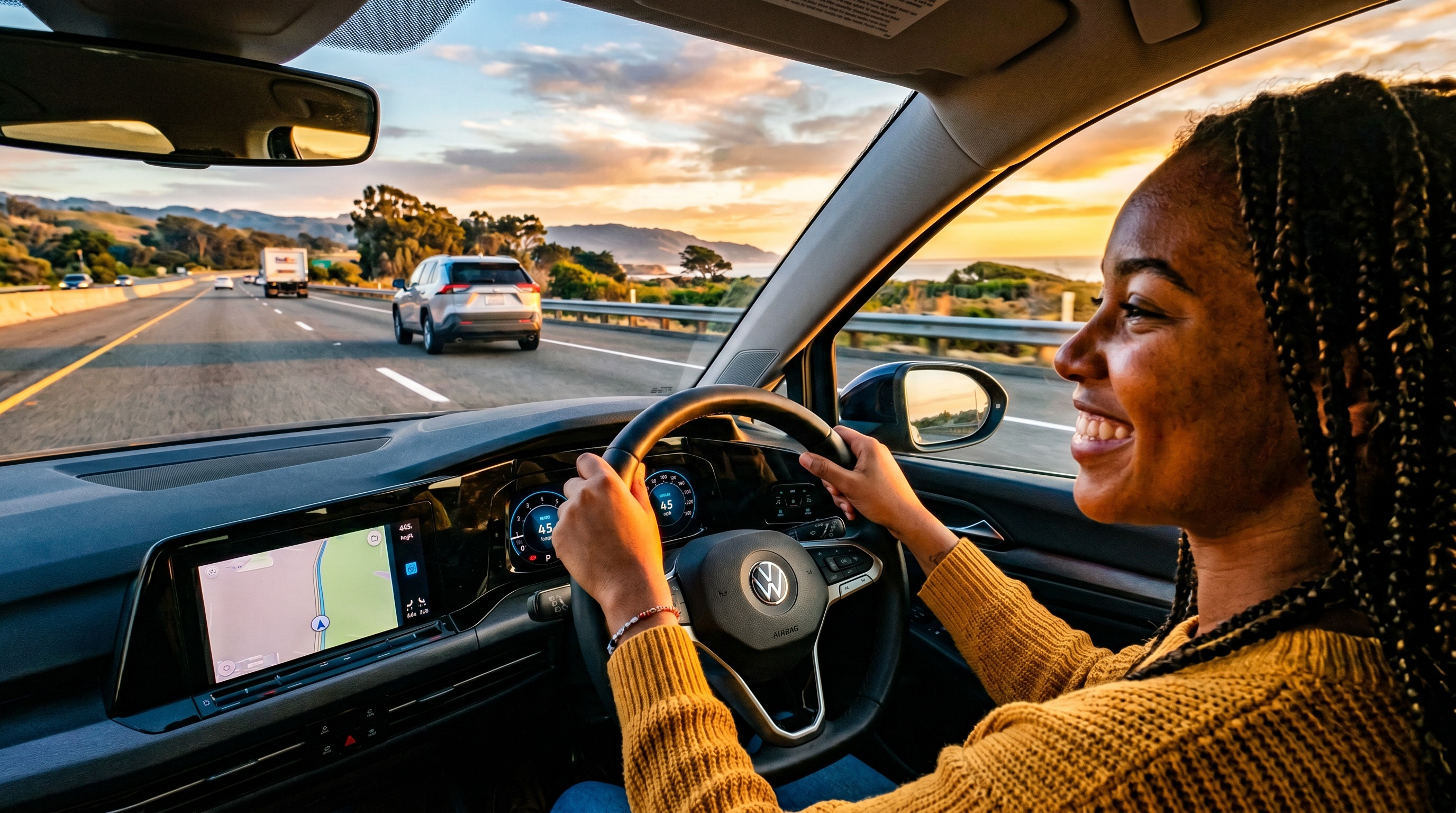
Master highway driving as a new driver. Learn merge techniques, speed control, lane positioning, and confidence tips for your first highway experience.
The moment you merge onto your first highway feels like crossing a major threshold in your driving journey—and it absolutely is. The speed, the merging traffic, the long stretches of road: it all happens faster than what you've practiced in residential streets and local roads. The good news? Thousands of new drivers navigate highways safely every day, and with the right preparation and mindset, you can too.
This guide breaks down highway driving into manageable steps: what happens before you enter the on-ramp, exactly what to do during your first merge, how to maintain safe spacing, and strategies for handling the psychological challenge of high-speed traffic. We'll also share real experiences from new drivers who've conquered this milestone.

Before you drive a highway for the first time, know where you're going. If possible, drive the route with an experienced driver or use Google Maps Street View to see the on-ramps, exit numbers, and general layout. Familiarity reduces anxiety dramatically.
Marcus, a 17-year-old from Ohio, spent 15 minutes on Street View looking at his first highway route before attempting it. "I knew exactly where the on-ramp was, where the exit looked like, and I could visualize the merge," he said. "When I actually drove it, my brain already had a map."
Ensure your:
Spend 20–30 minutes in a large, empty parking lot practicing smooth acceleration. Get comfortable with the feeling of pressing the gas pedal to gradually increase speed from 30 mph to 60+ mph. This builds muscle memory and reduces the shock of merging speeds.
The on-ramp is your acceleration and positioning zone. Its purpose is simple: give you space to match the highway's speed so you can merge smoothly without disrupting traffic.
The standard on-ramp is 300–600 feet long (roughly 3–6 seconds of driving at highway speed). That's your window to:
Most new drivers make one critical mistake: they reach highway speed too early and then coast, losing momentum. Instead, time your acceleration so you reach full highway speed right at the end of the on-ramp, where you'll merge.
As soon as you enter the on-ramp, begin accelerating smoothly and steadily. Don't rush it—instead, think of it as a gradual, continuous increase. Check your speedometer: are you at 55? 60? 65? Keep accelerating until you match the flow of traffic.
Caitlyn, a 16-year-old from Texas, said, "I was so nervous about merging that I matched speed too early, then I had to coast on the ramp and got distracted. The second time, I accelerated the whole way and it felt so much more natural."
While accelerating, use your mirrors constantly. Check the right mirror (your intended merge direction), then look over your shoulder to confirm there's no vehicle in your blind spot. Do this multiple times during the on-ramp—traffic changes quickly.
You need a 3-second gap minimum between the vehicle ahead and behind. Here's how to measure it: when the rear bumper of the car ahead passes a fixed object (a sign, a mile marker), count "one-one-thousand, two-one-thousand, three-one-thousand." If your front bumper hasn't reached that same object by three, you have a safe gap.
A 3-second gap at 65 mph is roughly 285 feet—plenty of room to merge safely.
When you've found your gap, use a gentle steering input to move into the right lane. Don't jerk the wheel—smooth, controlled movements. Maintain your speed and stay in that lane for at least 30 seconds before considering any additional moves.
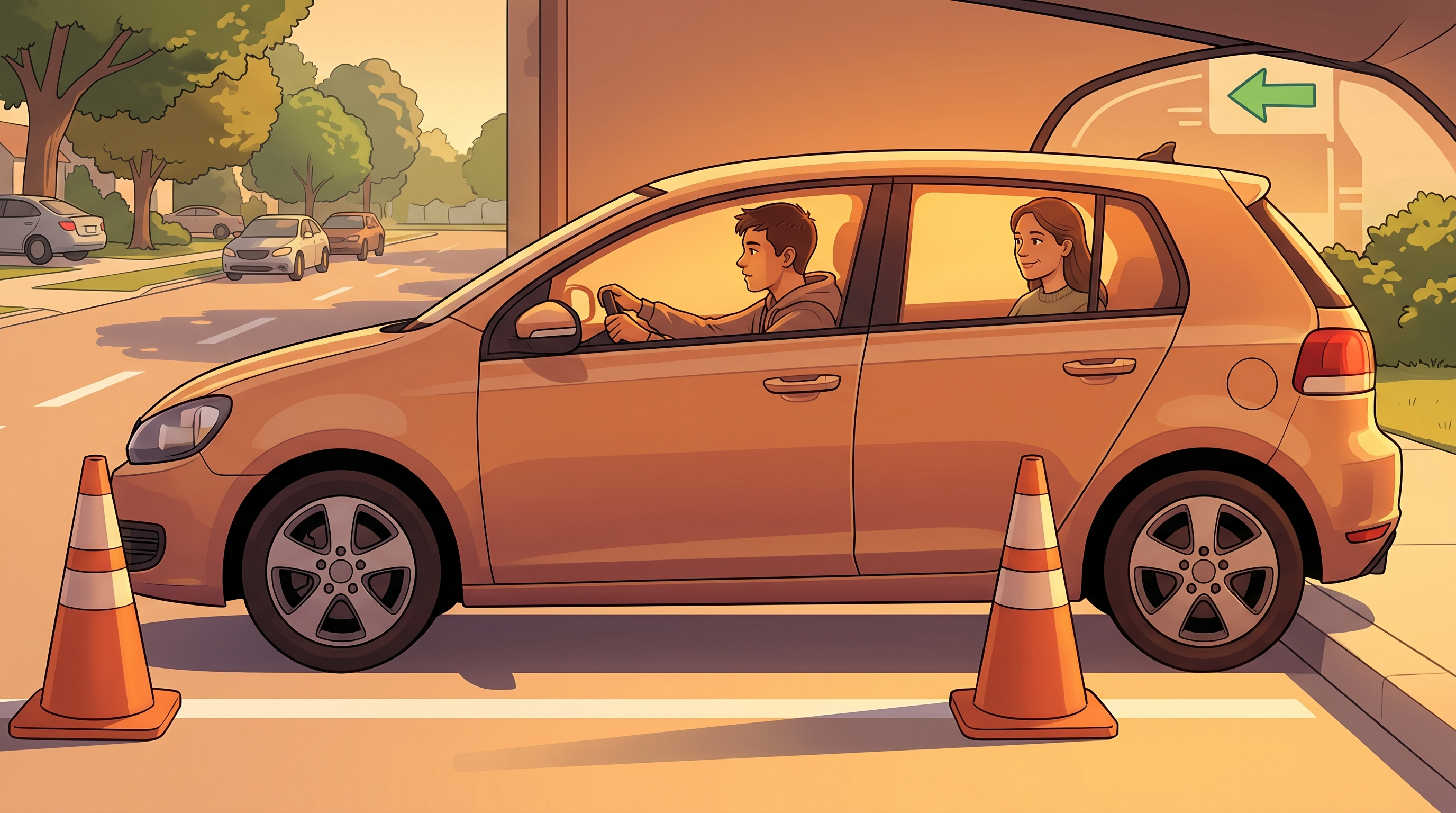
The right lane is slower, safer, and has frequent exits. For your first 10–20 highway trips, make the right lane your home. This lane is designed for cruising, not racing.
The left lane (passing lane) is for drivers actively passing slower vehicles. Left-lane camping is not only illegal in many states—it's dangerous and frustrating for other drivers. Plus, as a new driver, you're building confidence; the left lane introduces complexity you don't need yet.
Maintain at least 3 seconds of distance from the vehicle ahead. On a highway, vehicles are moving at speeds where reaction time is precious. Three seconds gives you room to brake without panic.
Do not swerve across lanes. This is the leading cause of highway accidents. Instead, take the next exit and use GPS to reroute. Missing an exit costs 5 minutes; a collision costs much more.
You're in a safe position—you're in the right lane, you're maintaining speed. Your anxiety is a sign of awareness, not danger. Take a deep breath, keep your eyes ahead, and remember: millions of drivers do this every day. Call a trusted driver for a pep talk if needed, but don't pull over suddenly on the highway shoulder.
Don't brake-check or speed up. Slow down gradually (not suddenly), and let them pass. They're not your responsibility; your safety is.
| Situation | Best Practice | Why |
|---|---|---|
| Entering the highway | Accelerate throughout the on-ramp | Matches traffic speed and uses the full merge zone |
| Choosing your lane | Right lane for first 20 trips | Lower speed, frequent exits, less merging required |
| Following distance | Maintain 3+ seconds | Provides reaction time at highway speeds |
| Missing an exit | Take the next exit | Prevents dangerous swerving; GPS reroutes easily |
| Feeling anxious | Stay in right lane, breathe | Anxiety is normal; you're not in danger |
| Exiting the highway | Signal 1/4 mile before exit | Gives drivers behind you time to adjust |
| Night driving on highway | Wait until you have 15+ highway miles | Darkness adds complexity; gain day experience first |
New drivers often underestimate the psychological shift that happens on a highway. You're moving faster, there's more traffic, and the environment feels less forgiving than residential streets.
Research from the IIHS (Insurance Institute for Highway Safety) shows that graduated driver's license (GDL) laws that restrict night driving and highway driving early in licensing significantly reduce accident rates among teen drivers. This isn't because highways are inherently unsafe—it's because experience and mental preparation matter tremendously.
Here's how to build confidence:
Exiting is actually simpler than merging, but many new drivers overthink it.
30 seconds before your exit:
As you approach the exit ramp:
On the ramp:
Marcus's first highway attempt was on I-71 near Columbus. "I was shaking before I even got on the on-ramp," he recalls. He accelerated too slowly, arrived at the merge zone below highway speed, and aborted his merge—a smart, safe decision. His second attempt, one week later, was methodical: he accelerated consistently, found his gap, and merged with only minor tension. Today, six months later, he drives highways regularly and is planning a road trip with friends.
Caitlyn's mother thought she'd be nervous on her first highway drive (I-35 near Austin). Instead, "I felt in control the entire time. I did all my checks, I knew what speed to go, and merging felt logical, not scary." Her preparation—watching YouTube videos and practicing merges in a parking lot—paid off with confidence from the first moment.
| Item | Purpose |
|---|---|
| Valid driver's license & registration | Legal requirement |
| Insurance card | Required if pulled over |
| Phone (mounted or in passenger's hand) | GPS navigation, emergency contact |
| Water bottle | Hydration for longer drives |
| Light snack | Energy for focus |
| Sunglasses | Reduces glare and eye strain |
| Headrest pillow (optional) | Reduces fatigue on longer drives |
The fastest way to pass your test is consistent practice with real questions. Try Wheelingo free — state-specific questions, instant explanations, and a readiness score that tells you when you're ready.
Q: What's the minimum speed I should go on a highway? A: Most highways have a posted minimum speed (usually 40–45 mph). However, match the flow of traffic. If everyone's going 60 mph in a 55 mph zone, go 60 mph—it's safer than creating a speed differential.
Q: Can I use cruise control on my first highway drive? A: Not recommended for your first 5–10 highway trips. Cruise control removes your active engagement with the gas pedal. Once you're comfortable maintaining steady speed, cruise control is fine for long stretches.
Q: What if I freeze up during a merge? A: It happens. If you feel unable to merge safely, let your current merge opportunity pass. There will be another one in 30 seconds. Abort and try again—no shame, no danger.
Q: How many highway miles do I need before I'm "ready"? A: Most drivers feel competent after 30–50 highway miles. After 100 miles, highways feel routine. There's no magic threshold; it's about gradual exposure.
Q: Is it okay to drive highways in rain or snow as a new driver? A: No. Rain reduces traction and visibility. Snow makes merging unpredictable. Build 50+ highway miles in dry, daylight conditions before attempting adverse weather.
Q: What should I do if I take the wrong exit? A: Take it. Use GPS to reroute at the local level. Never cross lanes suddenly to stay on the highway.
Highway driving feels monumental before you do it. The speed, the traffic, the responsibility—it's a lot. But here's the truth: it's also a carefully designed system. Vehicles are engineered for stability at highway speeds. Roads are built with merging zones. Traffic laws exist to keep everyone safe. And you've already proven you can handle acceleration, steering, and braking in controlled conditions.
Your first highway drive is a genuine achievement. It marks the moment you expanded your capability as a driver and became part of the millions of people safely navigating highways every day.
Ready to build more confidence before your first highway? Wheelingo's practice tests and step-by-step driving progress tracker help you identify skill gaps and build mastery before testing. And when you're ready, our app tracks every milestone—including highways.
Start your highway journey with preparation, not panic. You've got this.